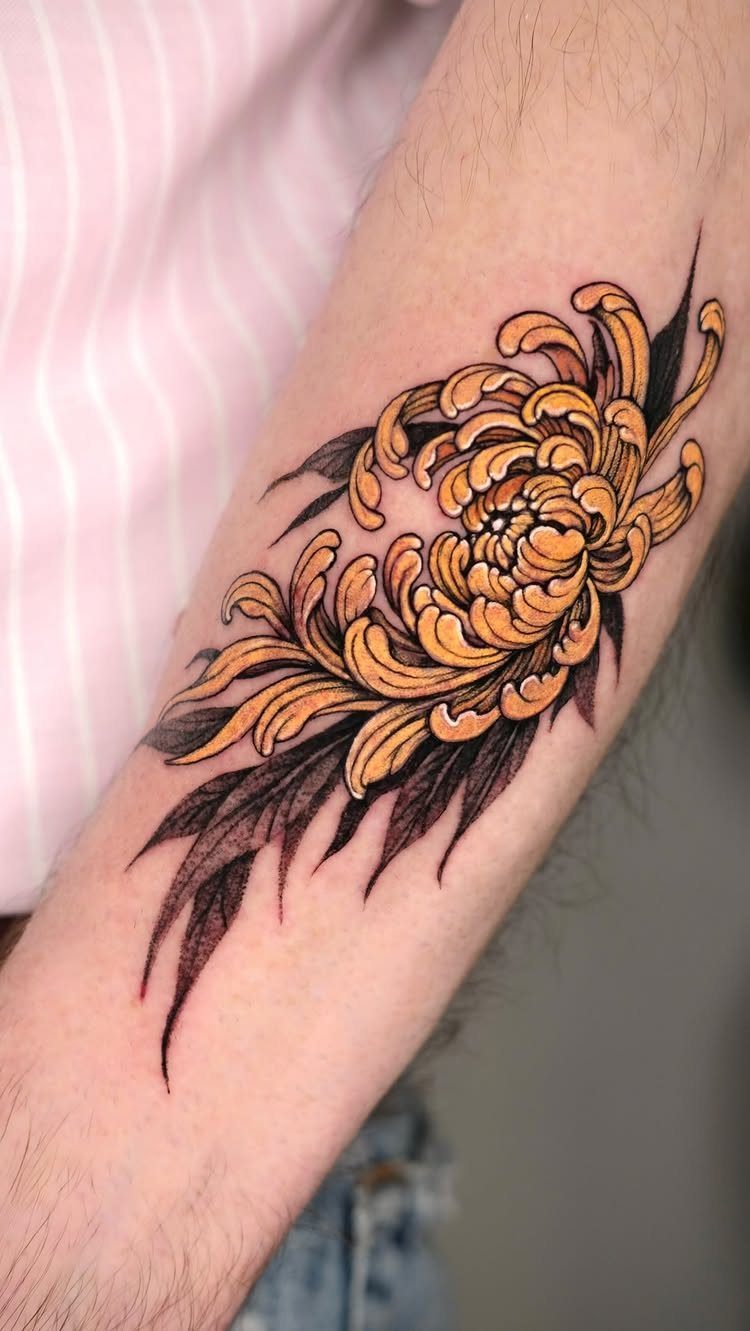
Tattoo style flowers range from a tiny ignorant-style daisy to full Japanese sleeves that span a back and take multiple sessions.
What separates one from another is how much you need the image to stay readable over time versus how much you want it to start a conversation now.
1. Black Ink Fine Line Flowers
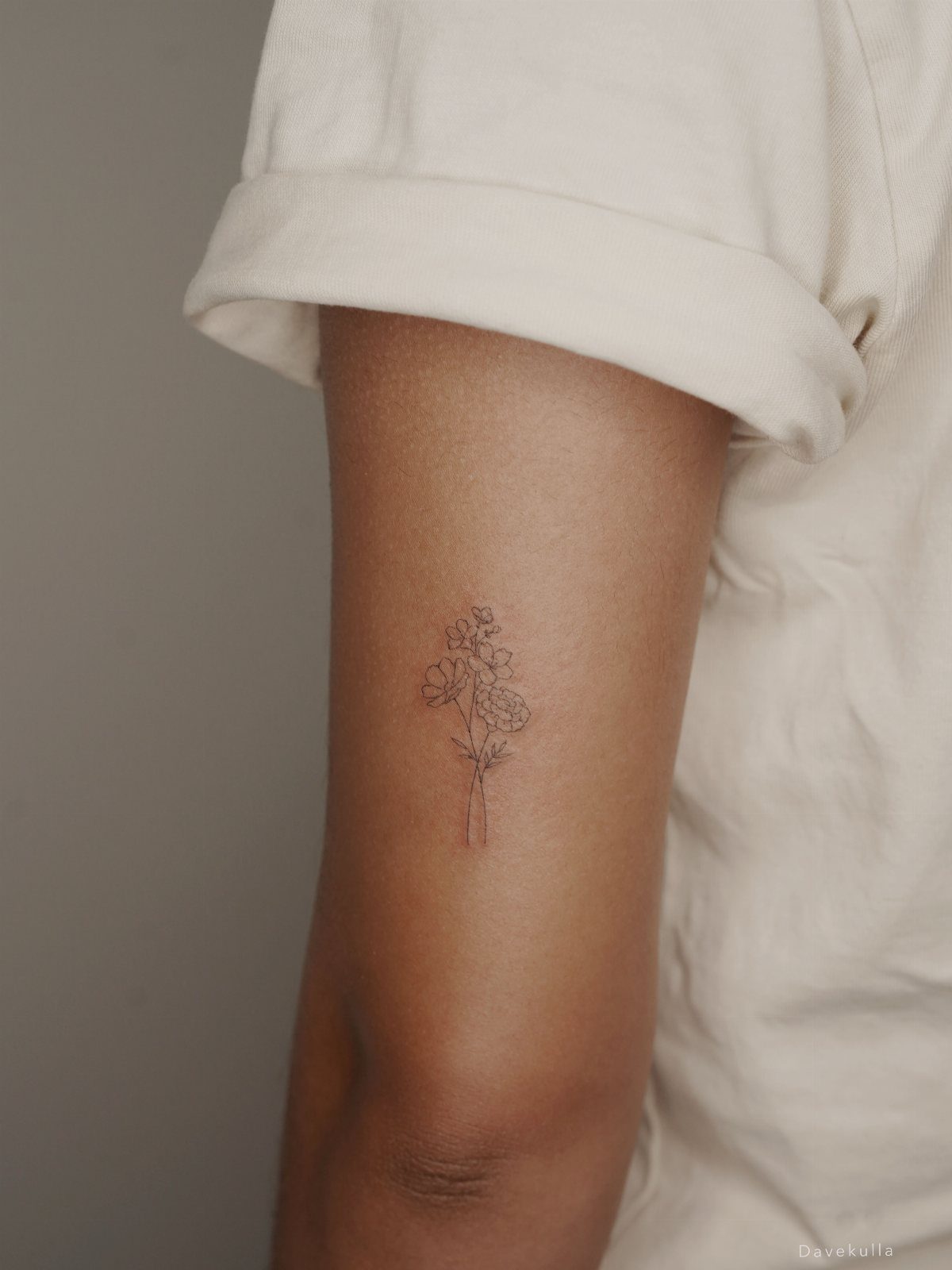
Fine line flower work sits close to the skin, reading almost like a pencil sketch that stayed.
The needles run at a lower voltage and the artist builds tone through repeated passes rather than solid fills, which means sessions run longer for the size but heal flatter.
A small bouquet on an upper arm gives you room to add stems later if you want.
The trade is longevity: these lines spread faster than bold traditional work, so placement matters. Inner arm or anywhere that sees less sun holds the detail longer.
I would ask the artist to show me healed photos from past work, not just fresh, before booking.


📦 【ALL-IN-ONE HENNA TATTOO KIT】 Unlock your creativity with our comprehensive DIY body art set! This mega bundle serves as a complete henna tattoo kit , including 149 diverse stencils, 6 premium henna cones in 3 rich colors (2 Black, 2 Brown, 2 Dark Red), paint brushes, cotton swabs, and gloves. It packs all essential tattoo supplies and body paint tools in one organized box, making it the perfect hassle-free alternative to traditional tattoo gun setups or messy transfer paper methods.
2. Traditional Flower Tattoos
Bold outlines and limited color palettes, usually red, green, yellow and black, are what separate traditional flower tattoos from everything else.
The style came out of sailor culture, and the rules still hold: thick black borders keep the color from bleeding into mud over decades.
Roses, daisies, and hibiscus show up most, often with butterflies or banners worked in.
Traditional flower tattoos read from across a room, which is the point. You are not chasing realism; you are choosing a symbol that stays readable when the lines soften.
Pain sits moderate, cost runs standard for the time, and the result ages better than almost anything else in the style.

COMPLETE KIT: Set includes 18 sheets of self-adhesive henna stencils featuring traditional Indian Mehndi designs for hands and body art

1 Set = 12 Sheets Henna Tattoo Stencils, 6 Pairs Right and Left hands stencils. Pasting position: Hand, Finger,Forearm, etc. Suitable for Henna tattoo, Airbrush Painting, Glitter tattoo, and so on;

COMPLETE KIT: Set includes 18 sheets of self-adhesive henna stencils featuring traditional Indian Mehndi designs for hands and body art
3. Japanese Style Flower Tattoos
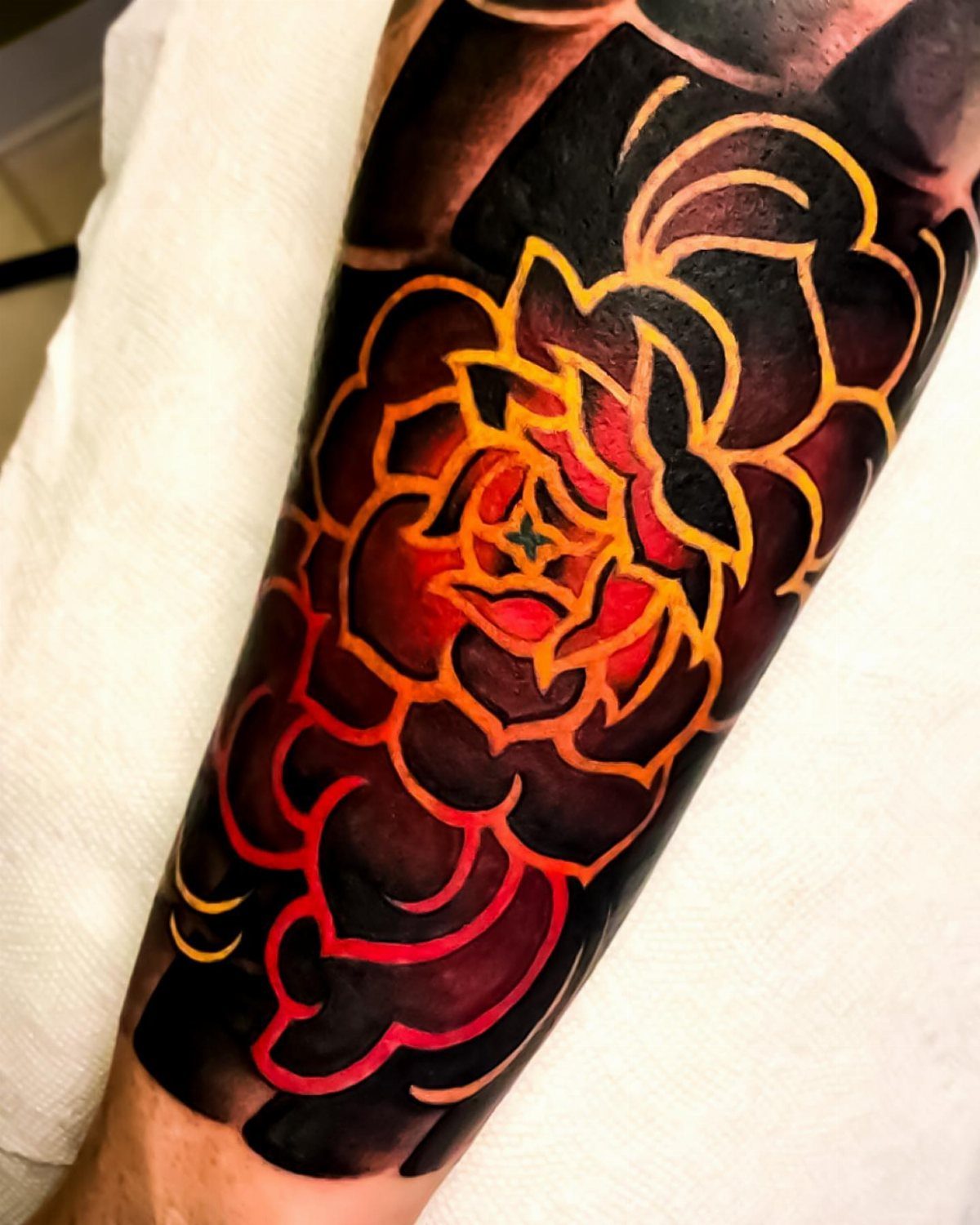
Japanese floral work borrows from ukiyo-e woodblock prints: asymmetrical compositions, bold outlines, and color fields that fade rather than shade. Peonies and chrysanthemums carry the most weight symbolically, peonies for wealth and risk, chrysanthemums for longevity and the imperial house.
Gold outlines around red and orange petals require an artist trained in Japanese conventions, not just someone who likes the look.
Waves or clouds often frame the flower to create movement across the body, and the placement follows muscle flow so the image shifts correctly when you move.
This is not a small-project style. A single flower can work, but the tradition expects the image to travel, wrapping a limb or spanning a back.

Dragonhawk Tattoo Needles: High-quality tattoo needles, manufactured under the trusted Dragonhawk brand, are perfect for all-purpose work. With a polished, long taper design, these needles ensure reliable performance and excellent control.

Package: 50pcs mixed tattoo cartridge needles, includes 10pcs each of 1203RL, 1205RL, 1207RL, 1209RL, 1211RL.
Package includes 10 pieces of each size: 3RL, 5RL, 7RL, 9RL, 3RS, 5RS, 7RS, 9RS, 5M1, 7M1
4. Ignorant Style Flower Tattoos
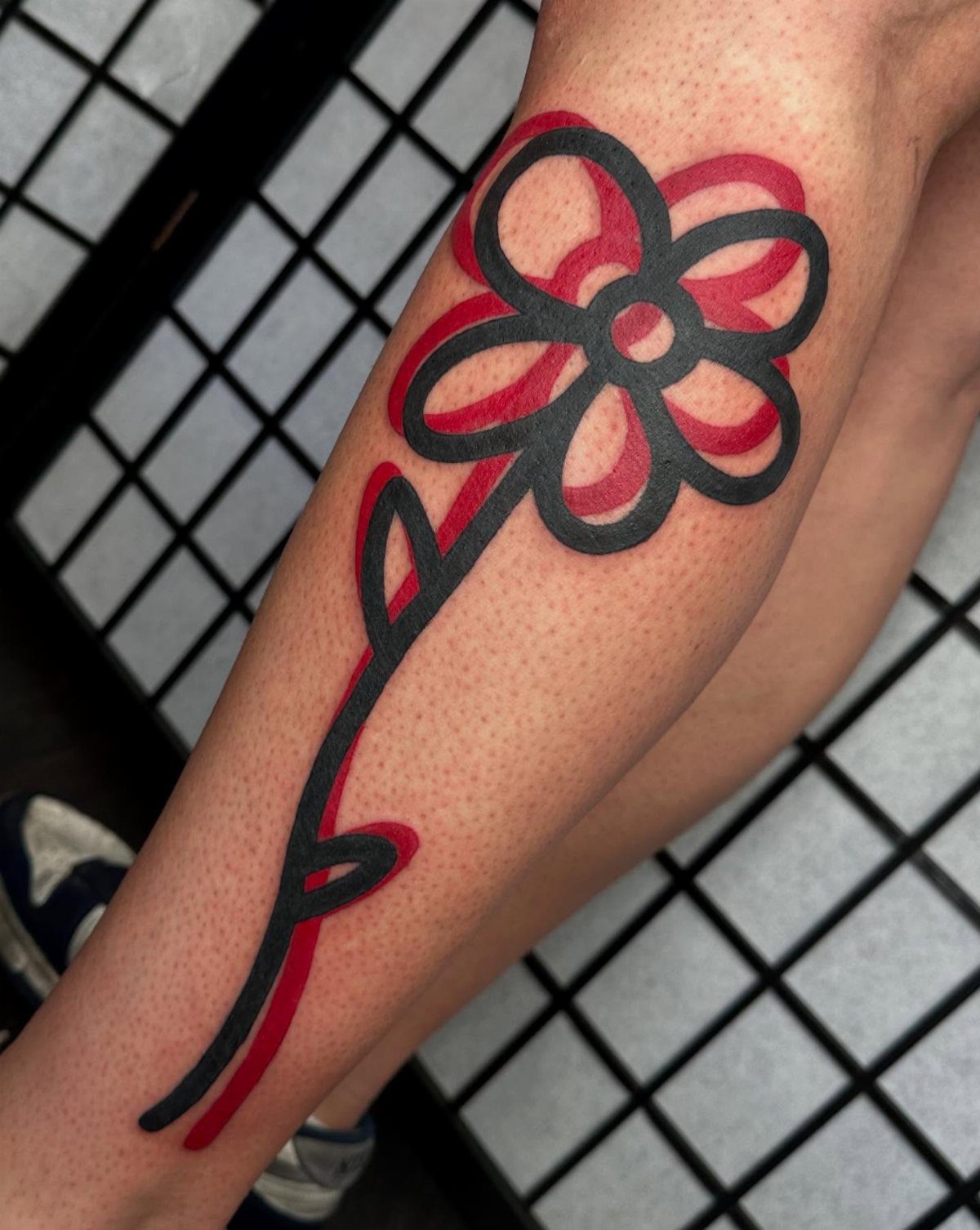
Ignorant style looks like a drawing from the margin of a notebook: wobbly lines, intentional mistakes, a red shadow line offset behind the black. The flower has that exact looseness, one step above a stick figure but deliberately so.
The appeal is personality over polish. You are not paying for technical perfection; you are paying for an artist’s specific hand and sense of humor.
The style traces back to European tattooers who wanted to break from Instagram-ready cleanliness, and it spread through flash sheets and social media rather than shops.
Simple daisies or tulips work best.
The design needs to read instantly, since the rough line quality will not survive much detail. Healing is standard, cost tends lower for the time spent, and the conversation it starts is half the point.

PACKAGE CONTENTS: There are 4 packs black temporary tattoo ink, 103 patterns tattoo stencils and one pin included in this comprehensive kit


RICH TEMPORARY TATTOO KIT - Contains rich tattoos pattern templates (126 designs),6 tattoo inks in 2 colors (black and brown),4 disposable gloves 1 pack of cleaning supplies,allowing you to easily create unique personalized tattoos
5. Colorful Flower Tattoos
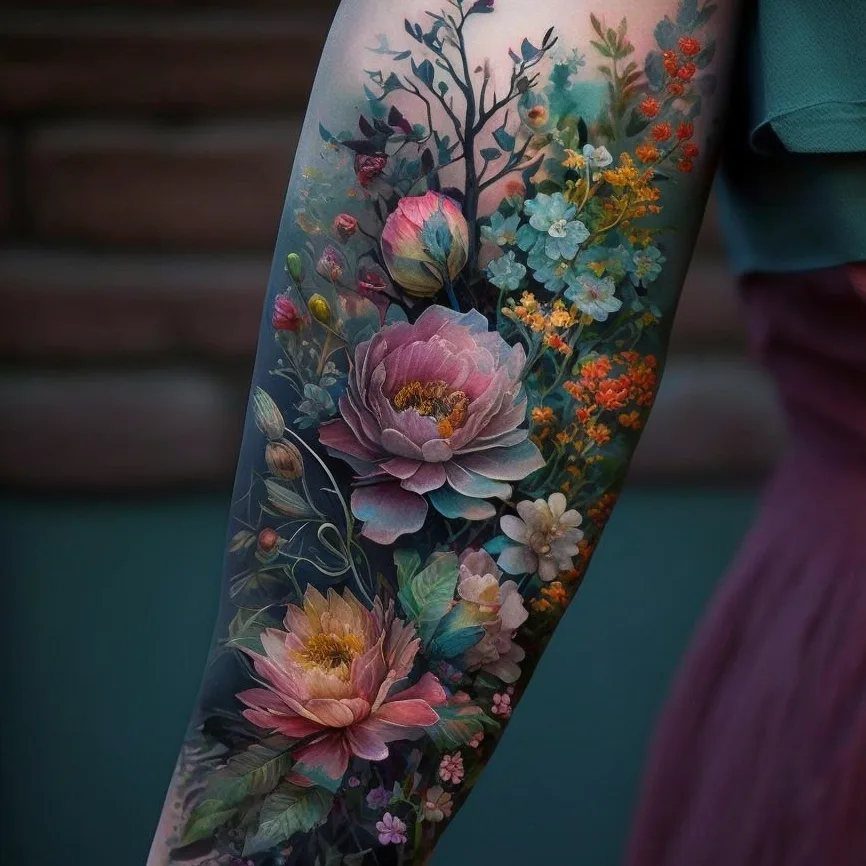
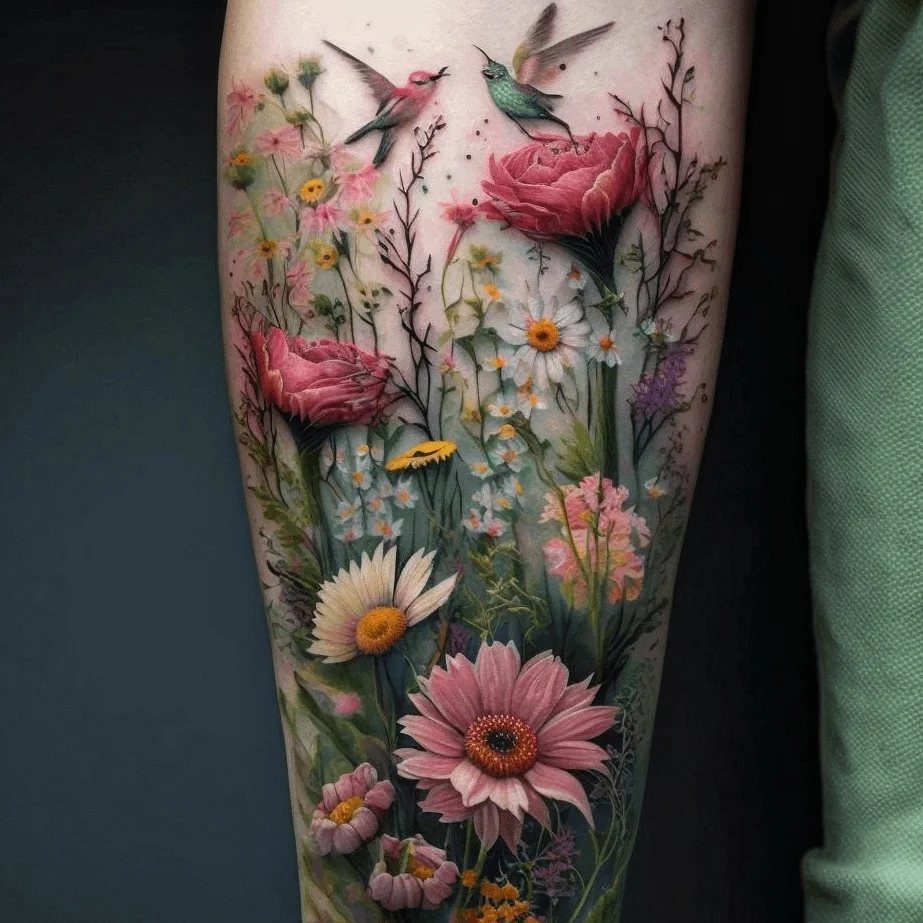
Full color floral sleeves or large pieces let an artist show off saturation and contrast the way black-and-grey work never quite allows.
Pink peonies against blue wildflowers need space to breathe; packing too many hues into a small area turns to visual noise within a few years.
The specific flowers matter less than how the colors relate. Warm reds and oranges advance, cool blues and violets recede, and green foliage ties the 2 fields together.
A good artist plans for fading: yellows and light pinks drop out fastest, so the design still reads when they soften to skin tone.
Sessions run longer, cost runs higher, and sun protection becomes non-negotiable. This is the version you choose when you want the tattoo to function as clothing, as a permanent visual event.

Package List - Includes 7 flower stencils for painting in varying sizes, perfect for creating beautiful daisy patterns in your art projects

[Package Included] This set includes 6 reusable daisy flower stencils in various sizes, perfect for a wide range of creative projects.

183PCS Different Styles Tattoos Stencil: Our temporary tattoo stencils forkids comes with 183 temporary tattoo stencils painting set design such as flowers, cats, hearts, skulls, dinosaurs, fruits, deer, scorpions, Hannah, unicorns, whales, cars, rainbows, telescopes, ships, too fast, astronauts, pirates, letters, stars and more Style in 12 sheets A5 size. Perfect for festivals, parties, or daily fashion.
6. Botanical Flower Tattoo with Leaves and Stems
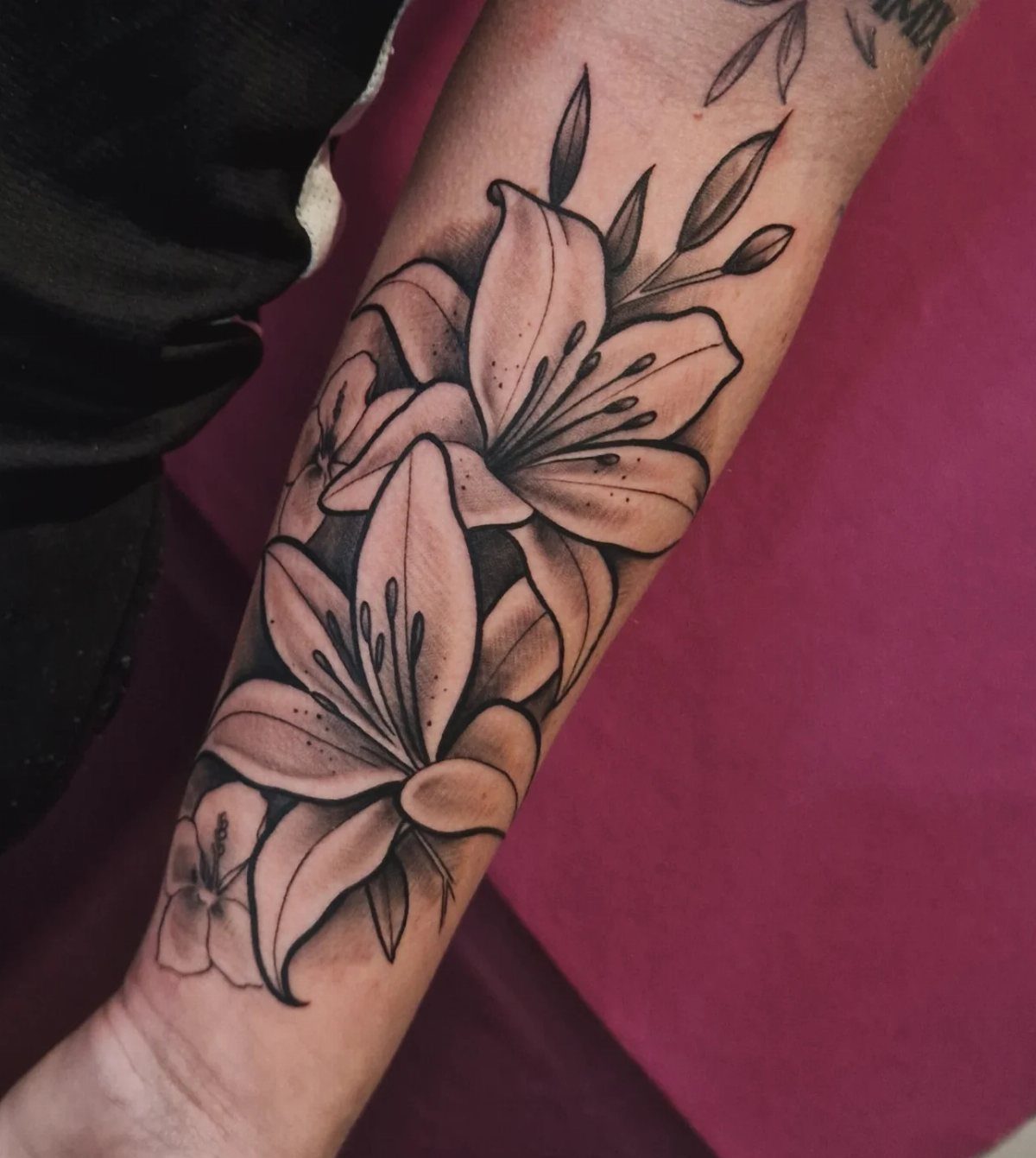
Botanical illustration tattoos aim for the accuracy of a field guide: correct petal count, visible stamens, stems that botanists could name.
Leaves and stems matter as much as the bloom. In a real botanical piece, the negative space between elements is planned, not accidental, and the composition follows how the plant actually grows rather than how tattoo tradition arranges flowers.
This means finding an artist who draws from reference, not from flash.
The style suits anyone who wants the flower for what it is, not just for what it means.
Healing is standard, though fine detail in stamens and veins can drop out if the artist overworks the skin. I would budget for a touchup once everything has settled, to replace anything that healed lighter than intended.

77 sheets american traditional temporary tattoos,17pieces 7.48*3.74 and 60pieces 3.85*2.28,including sailor,anchor,snake,eagle,sailboat,sailor, pentagram,lighthouse,heart,swallow,flower,vintage roses,swallows,demon,butterflies,sword,skull,eagle,scorpion

【All-In-One Complete Tattoo Kit】Comes with 9 coil tattoo machines, 20pcs tattoo needles, 10 bottles of colored inks, tattoo power supply, foot pedal, practice skin and all other essential accessories. Everything you need is included to start tattoo practice and official work immediately.

Quantity: 12 large Sheets and 13 small sheets removable temporary tattoo stickers, all different and unique floral desgins. Nature aesthetic fake tattoos with spring summer wild vibes.
7. Heart-shaped Flower and Leaves Tattoo
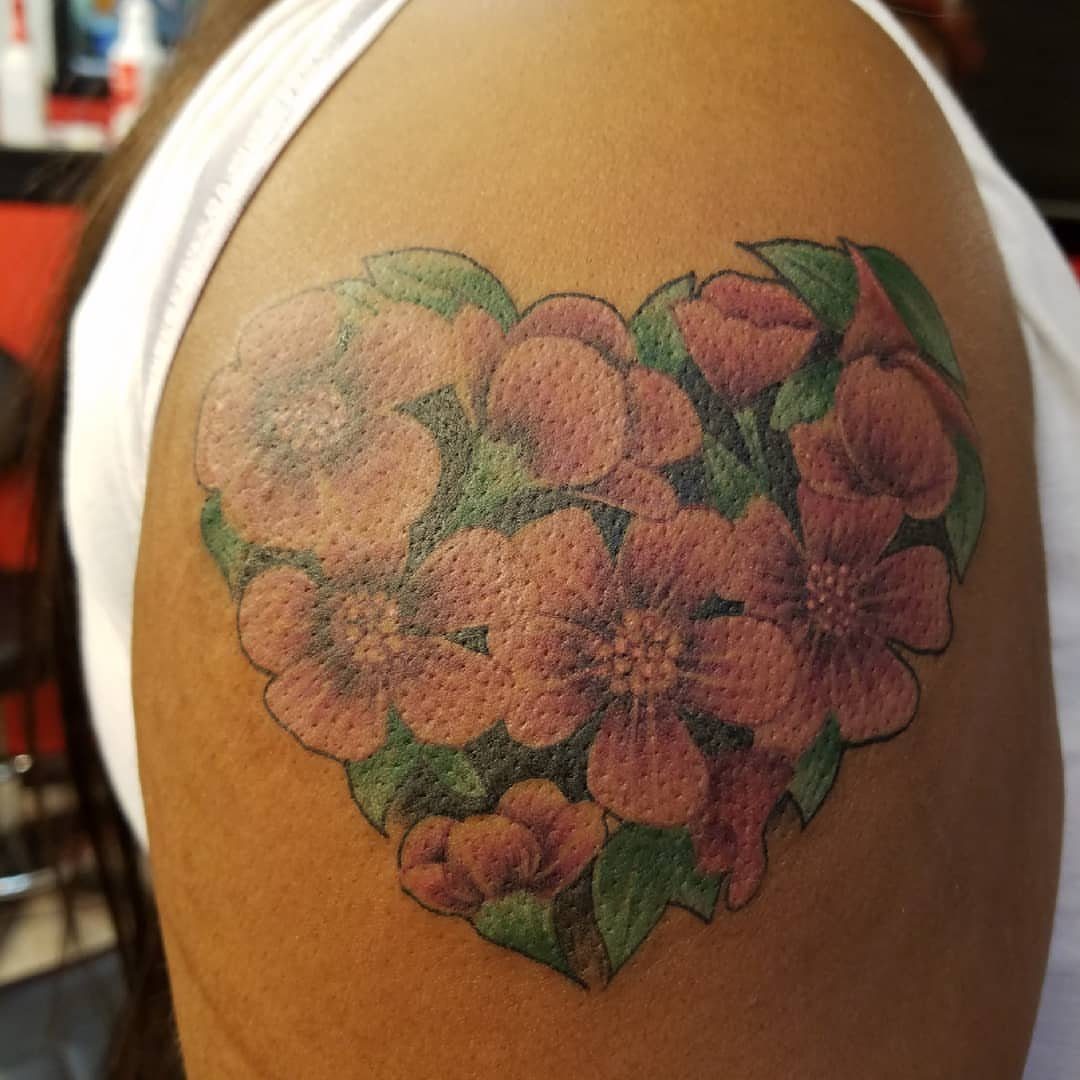
Heart-shaped floral work frames the sentiment literally: the blooms and leaves trace the outline rather than filling it, so the negative space does the shape’s work. Pink and orange blossoms against green foliage read warm without needing a hard border.
This suits an anniversary piece or memorial, where the heart carries specific weight.
The artist needs to balance the organic growth of stems against the symmetry the shape demands; too rigid and the flowers look forced, too loose and the heart dissolves.
Placement on shoulder or upper arm gives the curve room to breathe. I would keep the heart size modest; large ones trend toward craft-project territory.

Variety Pack: This henna tattoo stencil kit includes 12 sheets of intricate and detailed temporary tattoo templates inspired by Indian designs.1 Set = 12 Sheets Henna Tattoo Stencils, 6 Pairs Right and Left hands stencils. Pasting position: Hand, Finger,Forearm, etc. Suitable for Henna tattoo, Airbrush Painting, Glitter tattoo, and so on;

Decoration Sets: :You will receive 4 painting stencil templates with different cherry blossom patterns, the patterns are vivid and beautiful. Dimensions are 11.7x8.3 inch/29.7x21cm.

Package: 6 Sheets tattoo stencils. 3 layers PVC Henna tattoo stencils, Washable and Non-Toxic.,Design shown in the picture. Ink is not included
8. Flower and Butterfly Tattoos
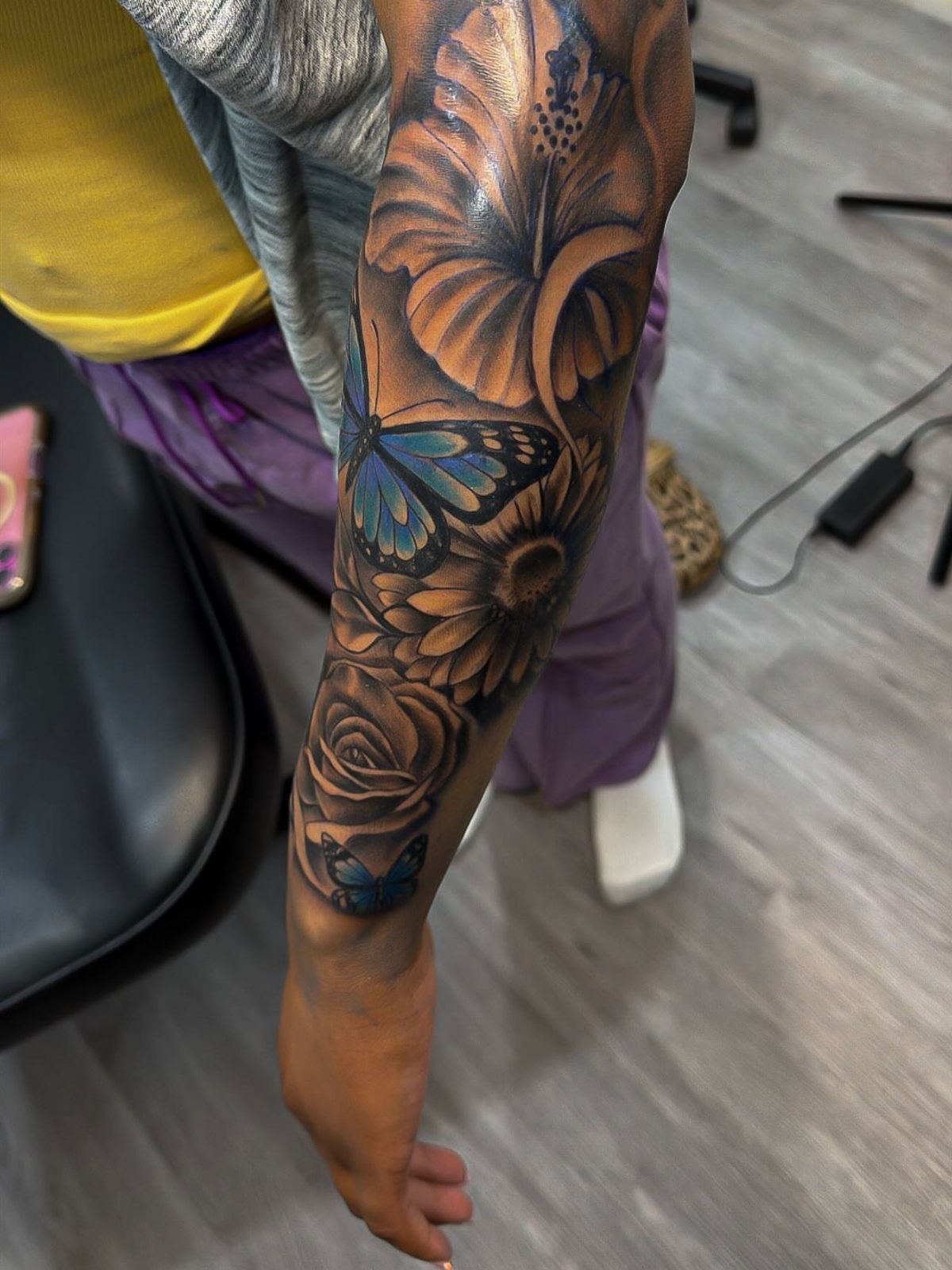
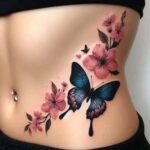
Butterflies give floral work motion and timeline: the insect arrives, feeds, departs, while the flower stays rooted. That pairing carries obvious symbolic weight, but the visual balance matters more in practice.
Cool blue butterflies read best as small, repeated accents against larger warm fields of red hibiscus and roses, which keeps the eye from fighting itself across a sleeve.
Traditional flash builds this pairing from bold outlines and flat color fields. Fine line versions need more care: the butterfly’s wings can overcrowd delicate petals, so one or the other must dominate.
A forearm sleeve has the length to stage the narrative, wrist to elbow, flower to flight. Single butterflies on a stem work for smaller commitments.

Poseidon cartridge adopt a one-time joint design hygienic standard The material is stainless steel and easy to color,and has better ink flow

Cartridge Needles Sizes: 20 pcs tattoo cartridge needles include 3RL 5RL 5RM 7RM, each size has 5pcs. Those tattoo needles can be used for lining and shading, which can assist you with the entire tattoo work

9. Peony Flower Tattoos
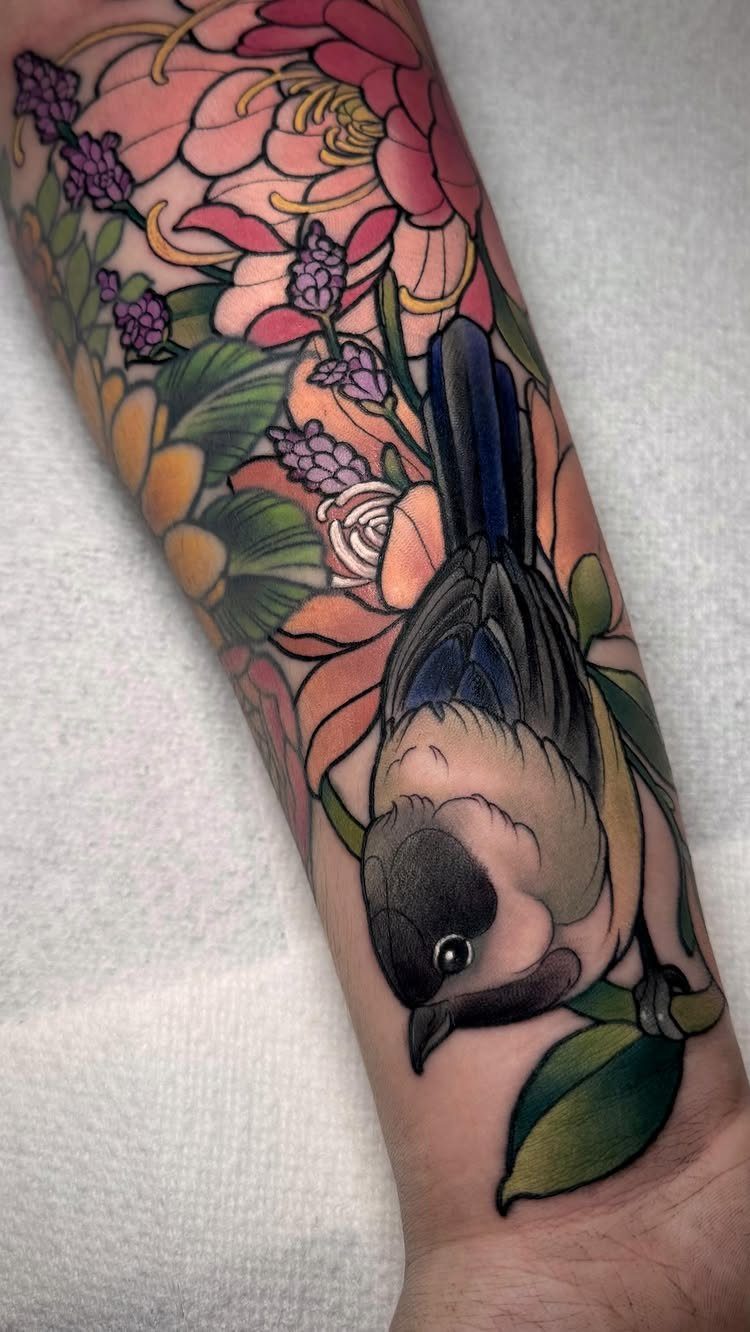
Peonies carry enough visual weight to anchor a piece alone. The layered petals build natural depth that shading only exaggerates, and the bloom’s ruffled edge gives an artist opportunity for fine detail without the geometry that roses demand.
Clusters read as abundance; a single large bloom with a chickadee perched among the petals, as above, stages a specific moment.
Japanese convention uses peonies as one element in a larger composition, often with filigree or waves, while botanical approaches isolate the flower for accuracy.
Black and grey versions rely on line weight to separate petal layers; color lets the pink-to-peach gradient do that work.
Either way, the peony needs space. A small one loses the detail that justifies choosing this flower over simpler shapes.
PACKAGE CONTENTS: There are 3 packs black temporary tattoo ink, 103 patterns tattoo stencils and one pin included in this comprehensive kit

RICH TEMPORARY TATTOO KIT - Contains tattoo templates (34 patterns),4 tattoo inks in 3 colors (black Maroon Cherry Red),4 disposable gloves 1 pack of cleaning supplies for a hassle-free temporary tattoo experience.

【Double-headed Design】- You will get a 6pcs - liquid eyeliner set in the package, each of which is about 12.3 cm in length and 1.17 cm in diameter, with a double-headed design, one head with an delicate soft black eyeliner pencil for drawing precise eye lines, and the other head with a tattoo eyeliner stamp use for eye decoration.
Commonly Tattooed Flowers
Roses, peonies, daisies, and hibiscus carry the most history in American tattooing.
Roses split between love and memorial depending on color: red for passion, yellow for friendship, black for grief. Peonies hold weight in Japanese work for wealth and risk, often paired with snakes or koi fish to balance the composition.
Daisies read innocent in traditional flash, small enough to tuck between larger pieces. Hibiscus signals tropical or feminine energy in old-school palettes, usually rendered in red or orange with a yellow center.
A rose’s layered petals work in almost any hand; a daisy’s flat face needs bold outline or it disappears.

【 575+ Fun Assorted Tattoo Stencils 】-The ChurlChurl tattoo stencils collection includes 575 high quality stencils with multiple themes. enjoy cute trendy tattoo stencil designs like butterflies, words, flowers, symbols, totem, Egypt style patterns and more.

What You'll Receive: Our Flower Stencils for Painting come in a set of 6 pieces, featuring both large and small spray paint stencils with daisy patterns.

Double Sided Tattoo Practice Skin: easy wipe, 2 sides designed fine line tattoo practice skins feature over 20 different stencil designs.
Different Styles of Flower Tattoos
Traditional and Japanese styles both use bold outlines, but the rules diverge fast.
Traditional keeps colors flat and limited: red, green, yellow, black. Japanese lets color fade like woodblock prints and expects the image to travel across muscle flow, wrapping limbs or spanning a back.
Ignorant style breaks from both.
Wobbly lines, intentional mistakes, and that offset red shadow line come from European artists reacting against Instagram-ready cleanliness. Flash sheets and Instagram have carried this look farther than any single shop could.
Minimalist fine line sits at the opposite pole: lower voltage, repeated passes for tone, longer sessions for the size.
Prettiest Flowers to Get Tattooed
Prettiness in a flower tattoo depends on what the shape does in the style you chose. Peonies carry enough visual weight and symbolic depth to anchor large pieces, whether in Japanese compositions or standalone botanical studies.
Roses carry more symbolic load, which can work for or against them. The geometry is tighter, the thorns add narrative, and the color range is wider: red, pink, yellow, black, each carrying its own message.
A peony in red and peach with gold outline reads luxurious; a rose in traditional flash reads immediate and legible from across a room.
Either can be the prettiest choice, but the peony forgives more space and more time spent looking.
Frequently Asked Questions
What are the different styles of flower tattoos?
Traditional, Japanese, minimalist fine line, and ignorant style are the main approaches. Japanese borrows from woodblock prints with fading color fields and asymmetrical compositions.
Fine line builds tone through repeated passes at lower voltage for a sketch-like result. Ignorant style deliberately breaks rules with wobbly lines and intentional mistakes for a notebook-margin feel.
What is the prettiest flower to get tattooed?
Peonies and roses compete for that title, but for different reasons. Peonies carry more visual weight and symbolic depth, with layered petals that build natural depth and ruffled edges that reward close looking.
Roses carry two main stories: love or memorial, and the color you pick sides with one. Thorns and tighter geometry add the narrative details.