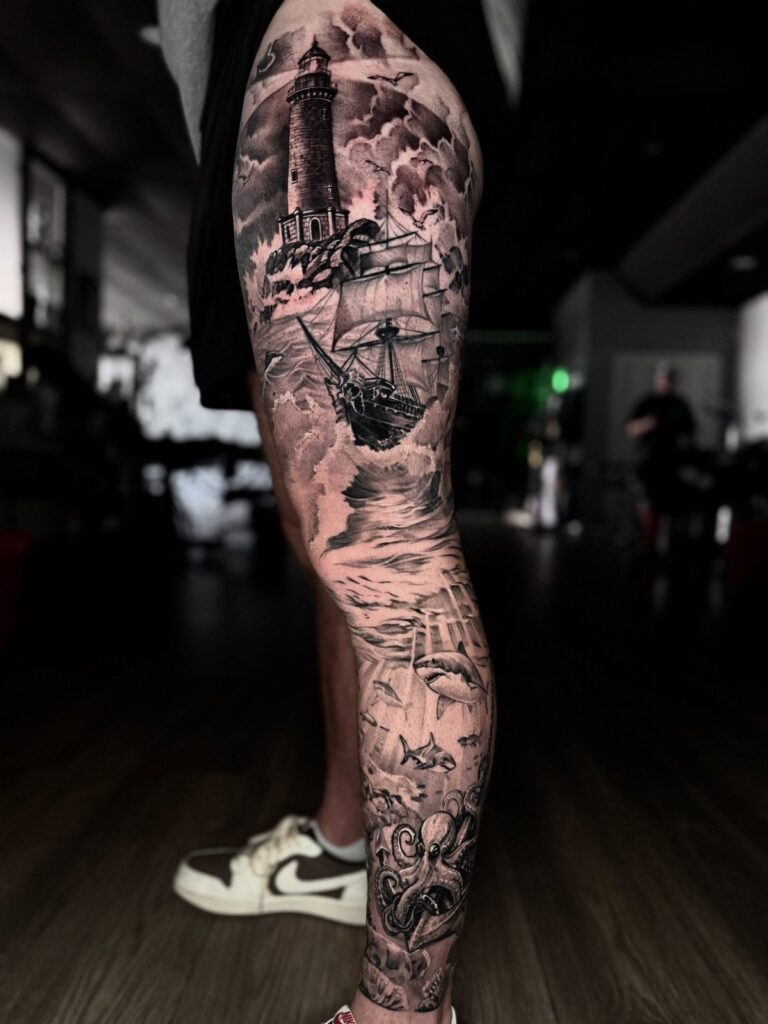
Ocean themed tattoos run from a single-session inner arm piece to a full sleeve built across multiple visits.
What decides which idea is yours is whether you want the heavy black and saturated color that stays legible as skin ages, or the fine line and watercolor styles that read softer now but need touch-ups to keep their shape.
The post below puts numbers to both paths: small stippled work sits at the low end, dense color packed solid runs into the thousands, with white ink and elbow placement flagged as risks before you commit.
1. Traditional Ocean Tattoo with Octopus
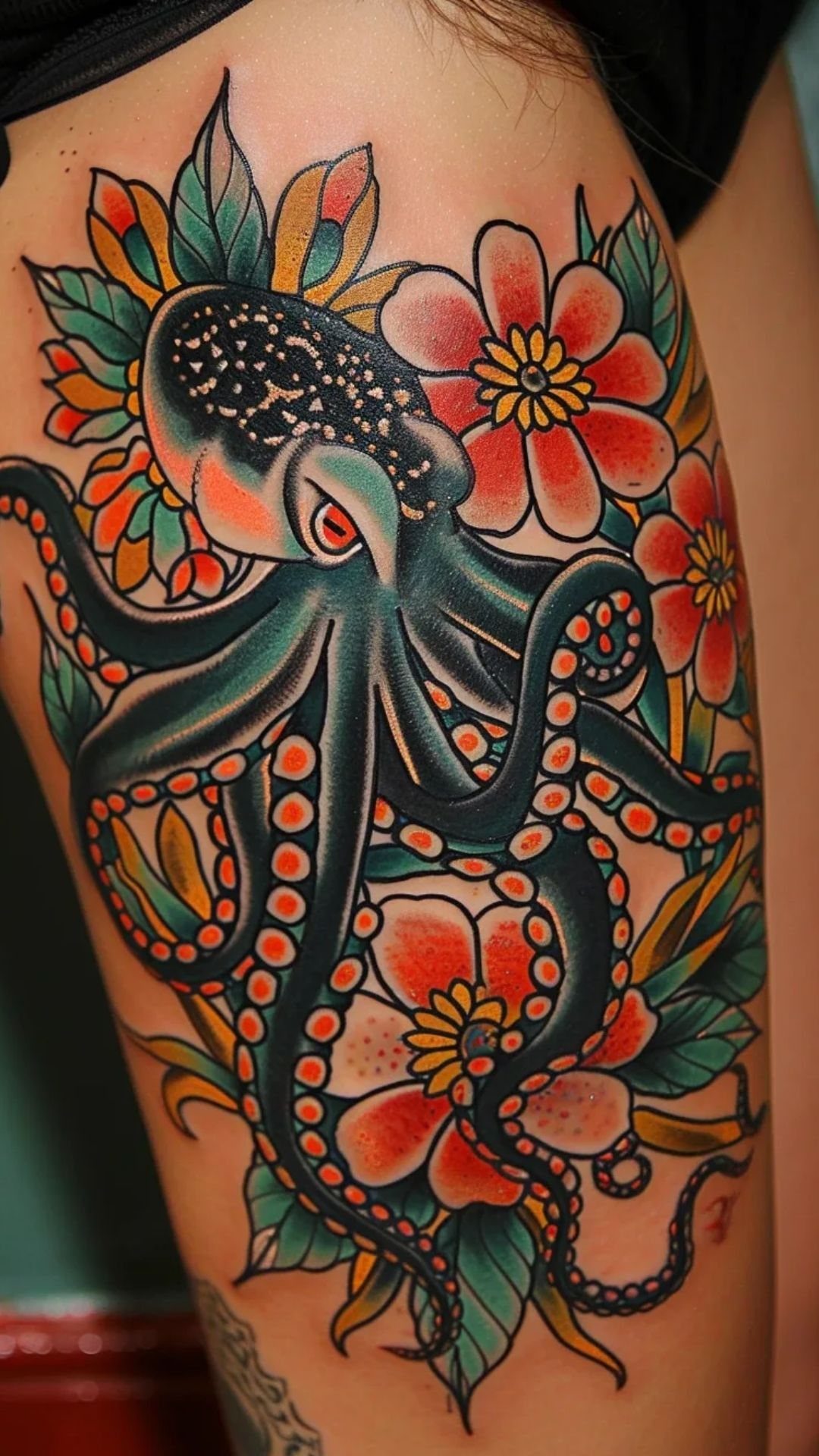
A traditional ocean tattoo builds its whole look from thick black outlines and a limited palette that reads at a distance.
The octopus version pairs the animal with bright florals, usually roses or tropical blooms, the tentacles weaving through the petals so neither element looks pasted on.
Bold color keeps it legible as skin ages, which matters for a piece this size.
The thigh gives the artist room to run the composition vertically, letting the octopus spread while the flowers fill gaps that would otherwise read as empty.
Pain here sits moderate; the inner thigh and spots near the hip bone sting more, but the outer muscle carries line work well. Budget for multiple sessions if you want the color packed solid.
2. Ocean Scene Sleeve
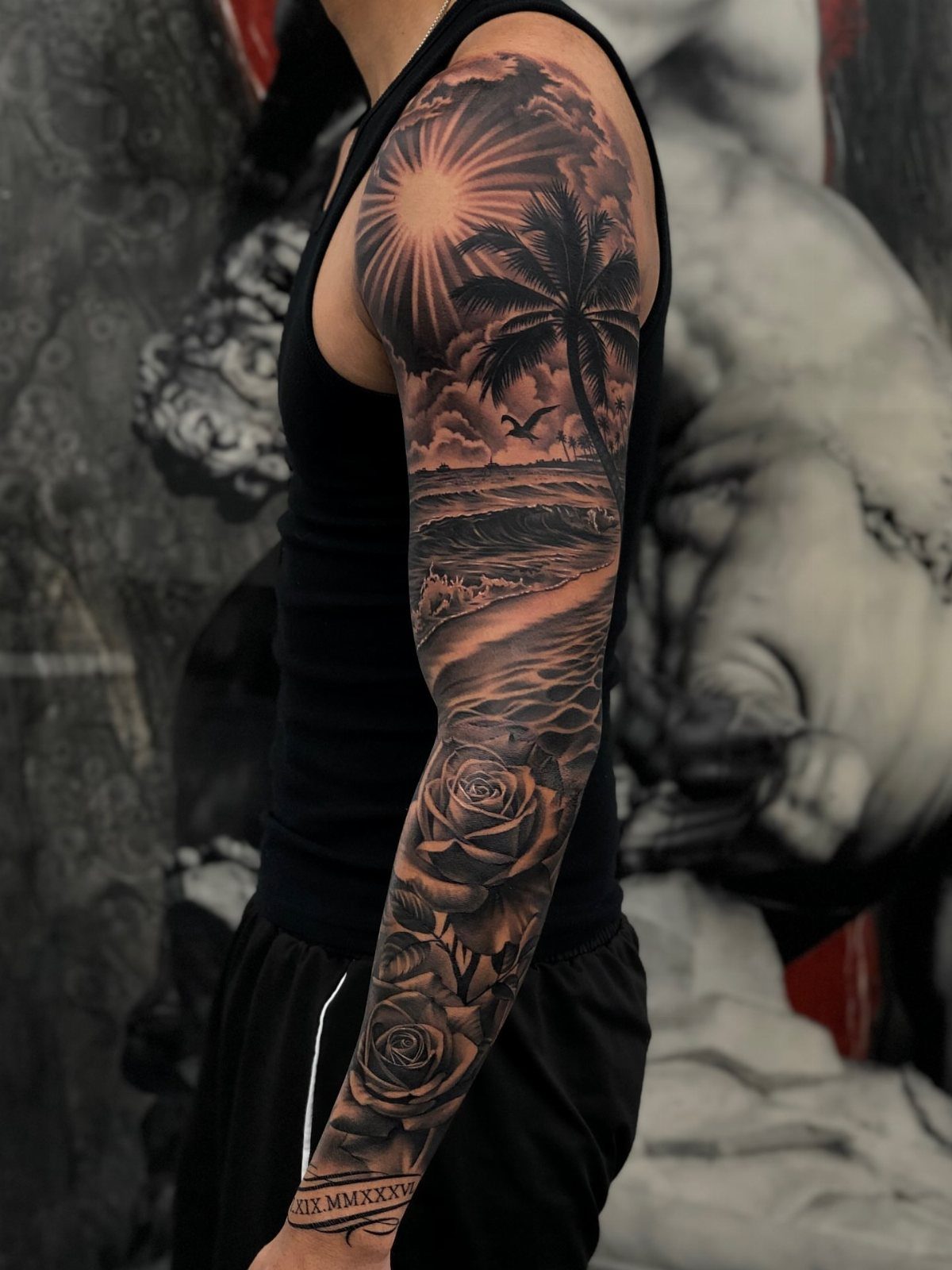
Sleeves need a unifying element or they read as unrelated flashes thrown together.
An ocean scene solves this by treating the arm as a single viewport: sky and sun at the shoulder, water line mid-arm, reef or wreck below that tapering toward the wrist.
Sharks and rays move through the middle ground, coral anchors the lower forearm where detail can stay fine.
A black and grey sleeve keeps everything coherent without fighting for attention; adding too many separate color notes breaks the sense of looking through water.
A sleeve this dense heals in stages, so plan for multiple sessions spaced out and budget for the hours that actually accumulate.
I would keep Roman numerals or lettering separate; they date faster than the scene and are harder to hide later.
3. Black and Grey Manta Ray
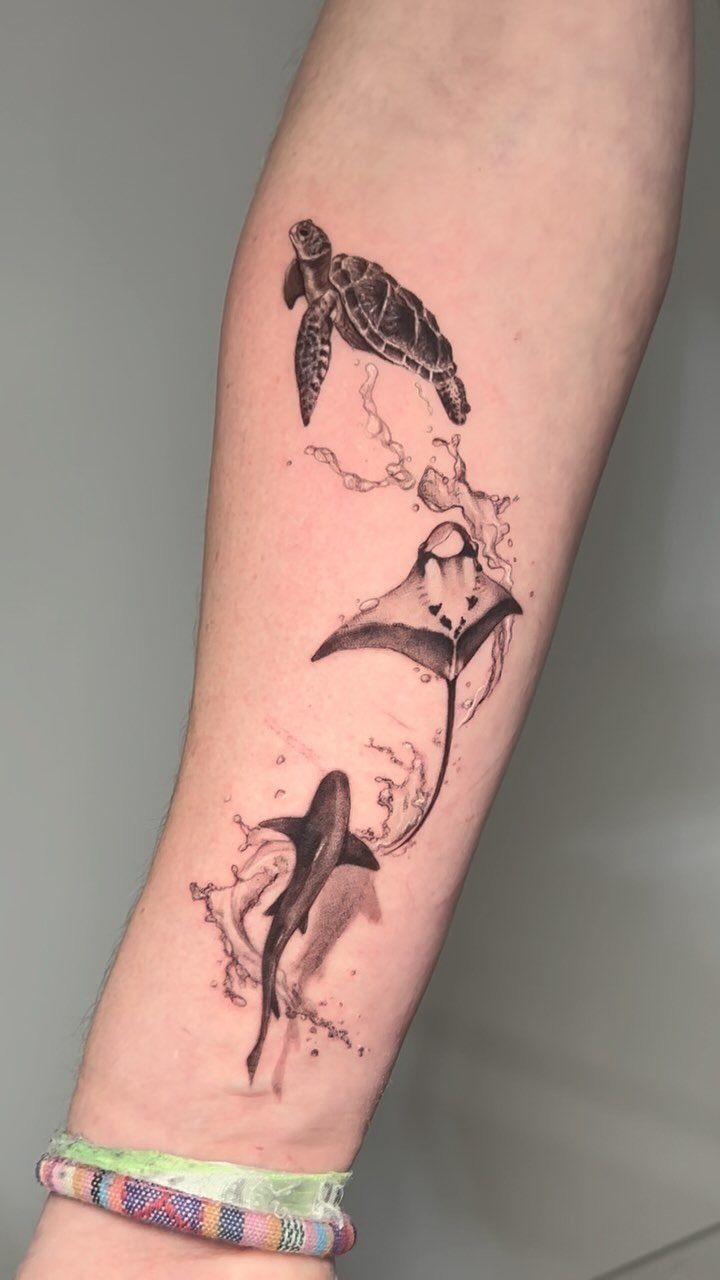
Manta rays carry less tattoo baggage than dolphins or anchors, so the image stays fresh to most eyes.
A black and grey base reads as form and shadow; watercolor splashes layered over it add movement without defining edges the artist cannot control.
Blue dominates, orange and pink appear as accents, stars scattered small enough that they do not compete.
This approach needs an artist who builds color in transparent passes; opaque coverage kills the underwater feel.
Splashes look accidental but require planning, the negative space between them as deliberate as the ray itself. Forearm placement keeps it visible, though the inner arm heals softer and the outer takes sun; factor touch-ups into long-term cost.
4. Detailed Jellyfish
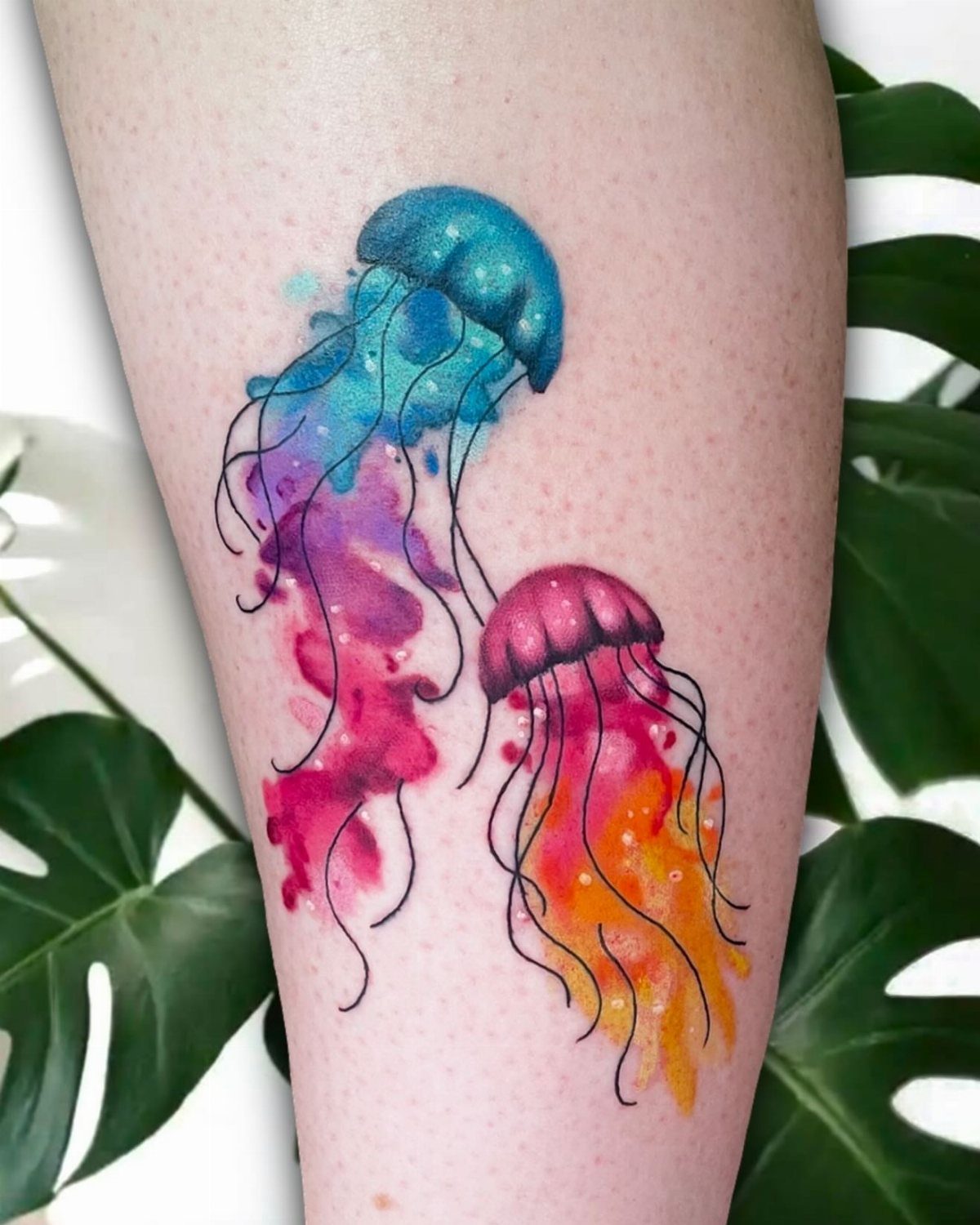
Jellyfish translate well to skin because the subject itself is translucent; the tattoo mimics what light does passing through tissue.
Fine line work defines the bell and tentacles, watercolor shading inside those lines suggests the purple and blue glow without hard boundaries. Monstera leaves ground the creature, giving the eye a solid shape to rest on.
The technique is fragile.
Lines this thin blur over years, especially on calf or forearm where socks and sleeves rub. I would ask the artist about their experience with watercolors that age; some pack more pigment near the lines to create a buffer zone.
Plan for touch-ups; the fine lines and pale washes in a piece like this fade at different rates and need attention before they blur.
5. Octopus Tattoo
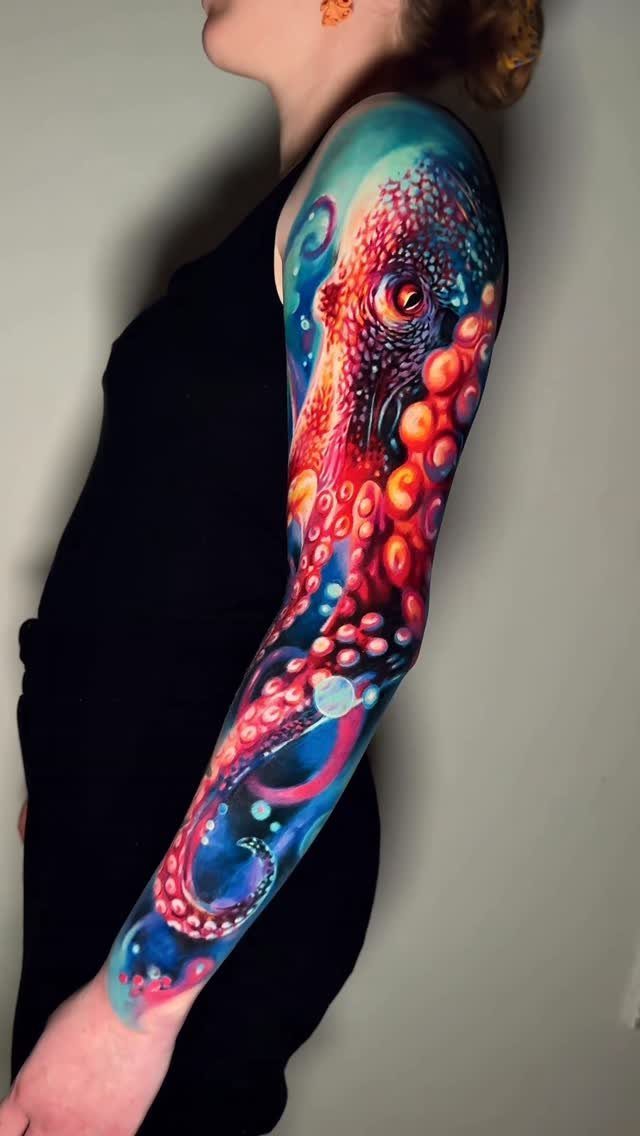
An octopus tattoo lives or dies by how the tentacles move. Wrapping tentacles around the arm’s cylinder lets the shape turn with the body; viewed from any angle, some advance and others recede.
Stippled shading builds texture without the heavy black of traditional work, letting the red and blue read as brighter than they are.
Black and grey alternatives exist with floral accents, the stippling carrying the same depth in quieter tones. Either version needs an artist comfortable with large-scale flow; flash-sized octopi often look pinned down, the tentacles cropped awkwardly.
The upper arm and shoulder start the composition, the forearm completes it. Do not stop at the elbow unless you want a visual stump.
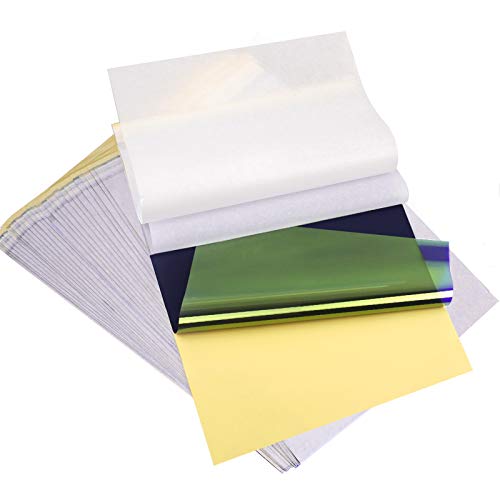
ADVANCED MATERIAL: Tattoo transfer paper is made with the high quality dyes and stencil paper. Transfer marks are very clear, clean and smooth. Tattoo transfer paper kit come with 35 sheets. Great for tattooing, trace and transfer images onto the body.<br>

Warm Tips: The tattoo transfer paper need to work with transfer medias.You will need to purchase the stencil ointment separately. Apply the design made on the master paper. Please pay attention to press the back side of the pattern to the skin for at least 3 seconds

Precision Transfers & Long Lasting: Tattoo stencil paper delivers vibrant, high-definition transfers even for intricate designs. Creates crisp, dark lines that transfer cleanly to skin (clearly on different skin tones) which are easy to follow during tattooing. The carbon layer made from high-quality dyes ensures sharp outlines without smudging or fading and maintains crisp lines visibility throughout long tattoo sessions, so you can focus on creating art instead of re-drawing lines
6. Vibrant Sea Turtle Ocean Tattoo
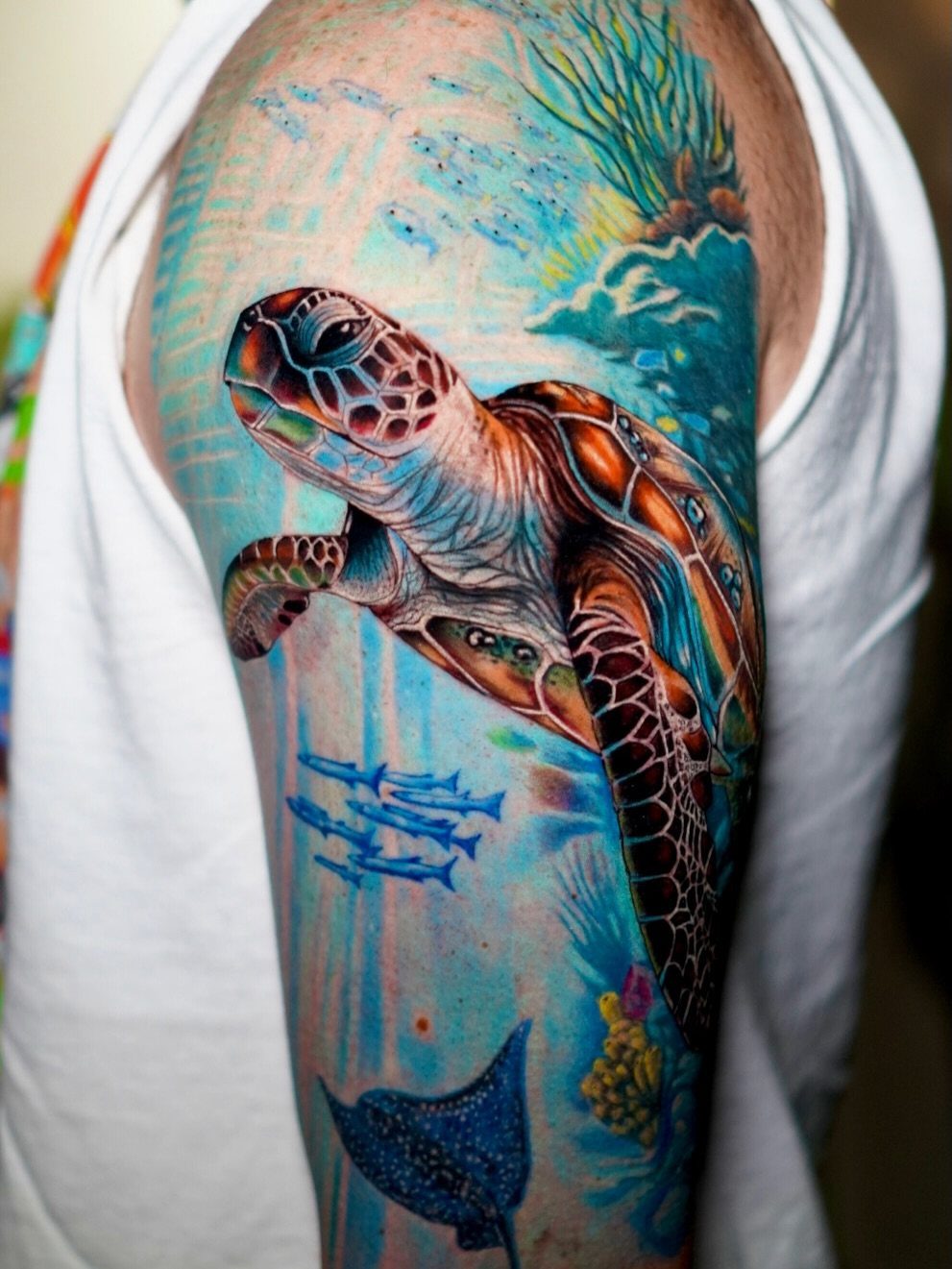
Sea turtle tattoos risk sentimentality; an active scene counters this, with the animal swimming over coral, fish and a stingray in the mid-ground.
The color here is saturated, blue water, orange and pink reef life, the turtle’s shell patterned in natural tones rather than neon. It reads as a habitat, not a mascot.
Upper arm placement keeps the turtle’s size generous; shrinking it to fit a wrist loses the surrounding life that makes the piece work.
Consider whether the stingray and coral are enough background or if adding a shipwreck tips the balance toward clutter; some collectors have already taken that option.

Deluxe All-in-One Tattoo Kit:Includes 20 reusable tattoo stencils, 14 tattoo paste cones in 10 vibrant colors, tattoo paste mixing bottles, cotton swabs, and disposable gloves—everything needed for advanced DIY body art and color creativity.

Temporary tattoo kit:Create stunning body art in minutes! This 141piece temporary tattoo kit includes 6 vibrant inks (1*Maroon,2* Black, 3*Brown), 6 pcs alcohol premium stencils. Safe, non-toxic & waterproof for all ages – express yourself worry-free!
7. Fine Line Ocean Tattoo with Turtles
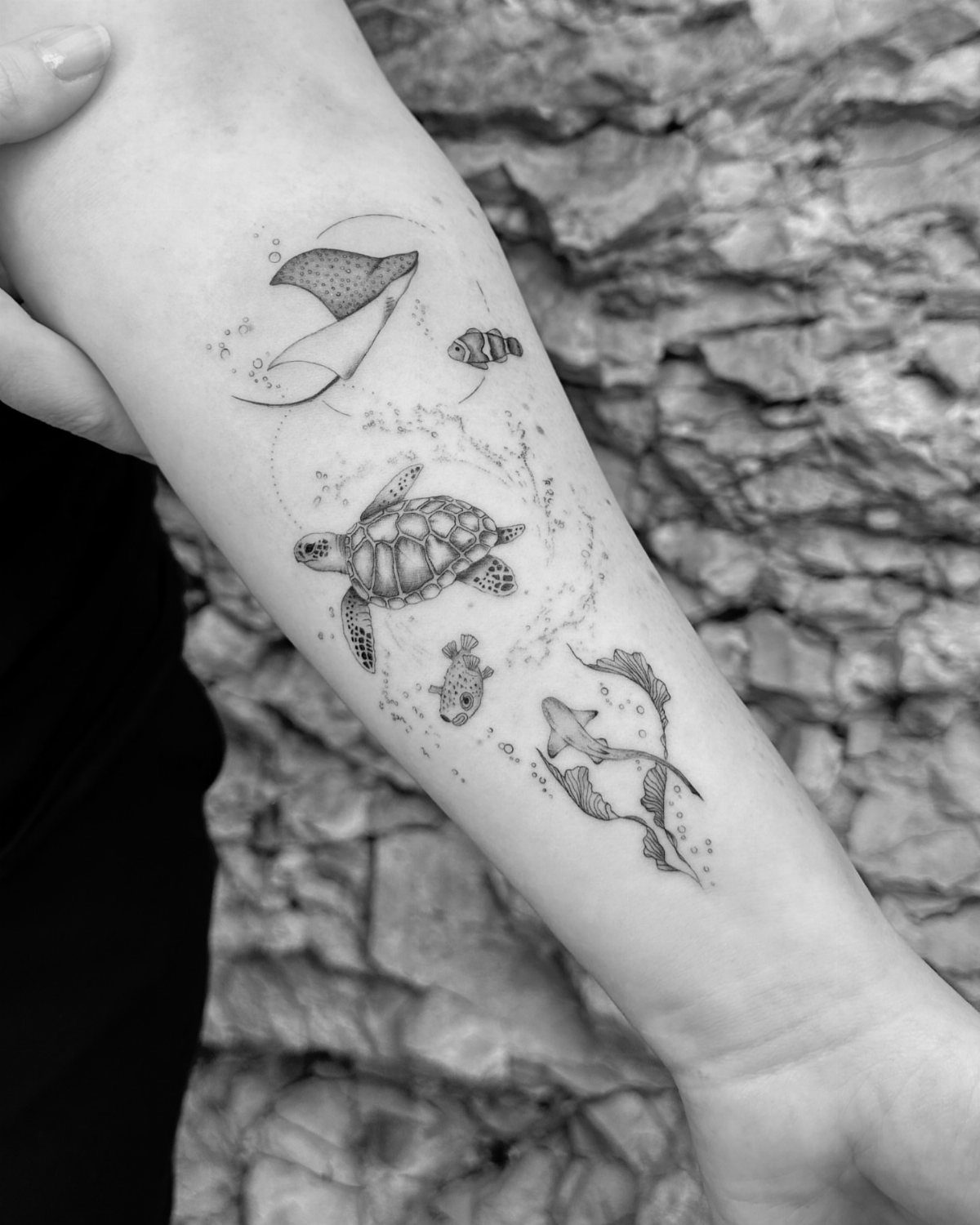
Fine line work lets several animals share skin without crowding; the turtle anchors the group, manta ray and clownfish drift around it, each drawn with hair-thin strokes that stay distinct.
The style suits someone who wants marine life but not the heavy black of traditional coverage.
Flow matters more than accuracy. A tattoo this linear ages best when the shapes overlap naturally, tentacles or fins crossing so the eye reads movement rather than a lineup.
Ask the artist how they space the elements; too much gap and the skin between dominates, too little and the lines blur together as they soften.
I would keep the palette to black ink only; color in fine line competes with the delicacy rather than adding to it.
8. Dolphin Tattoo
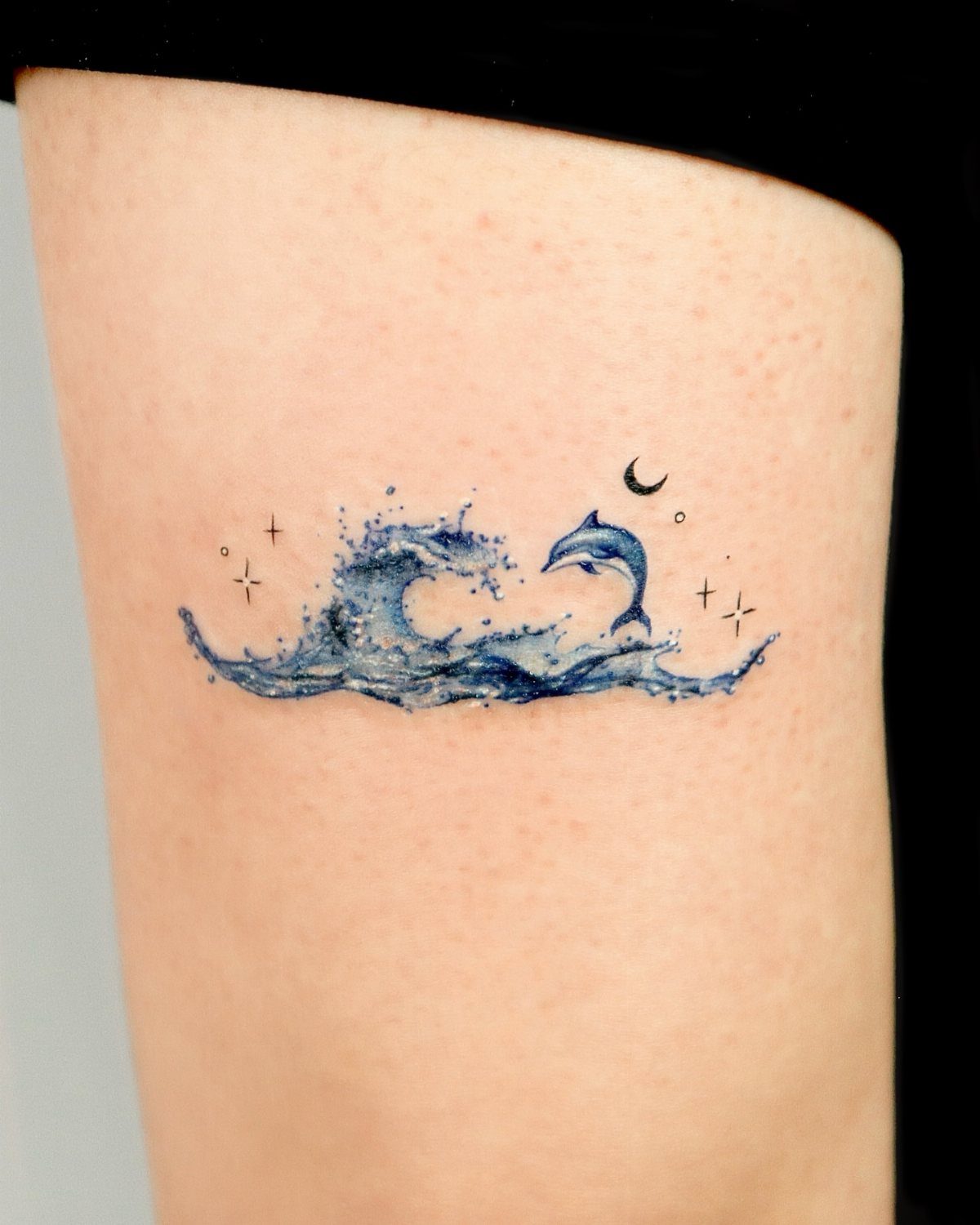
A dolphin leaping reads as motion itself, the arc of the body enough to carry a small tattoo without extra framing.
Watercolor backgrounds in swirling blues and greys let the animal emerge from actual water rather than floating on skin, though the style needs an artist who layers transparently; opaque blues muddy fast.
Larger pieces run the risk of becoming dated wallpaper, dolphins and coral reefs in full color across a back or thigh age toward the souvenir-shop aesthetic.
I would keep it to arm or calf scale, the leap alone, maybe a crescent moon if you want one counter-element.
The color version pops more initially; black and grey stays quieter longer. Either way, the dolphin’s eye is the detail that keeps it alive, so check the stencil before the needle starts.
9. Seashell Tattoo
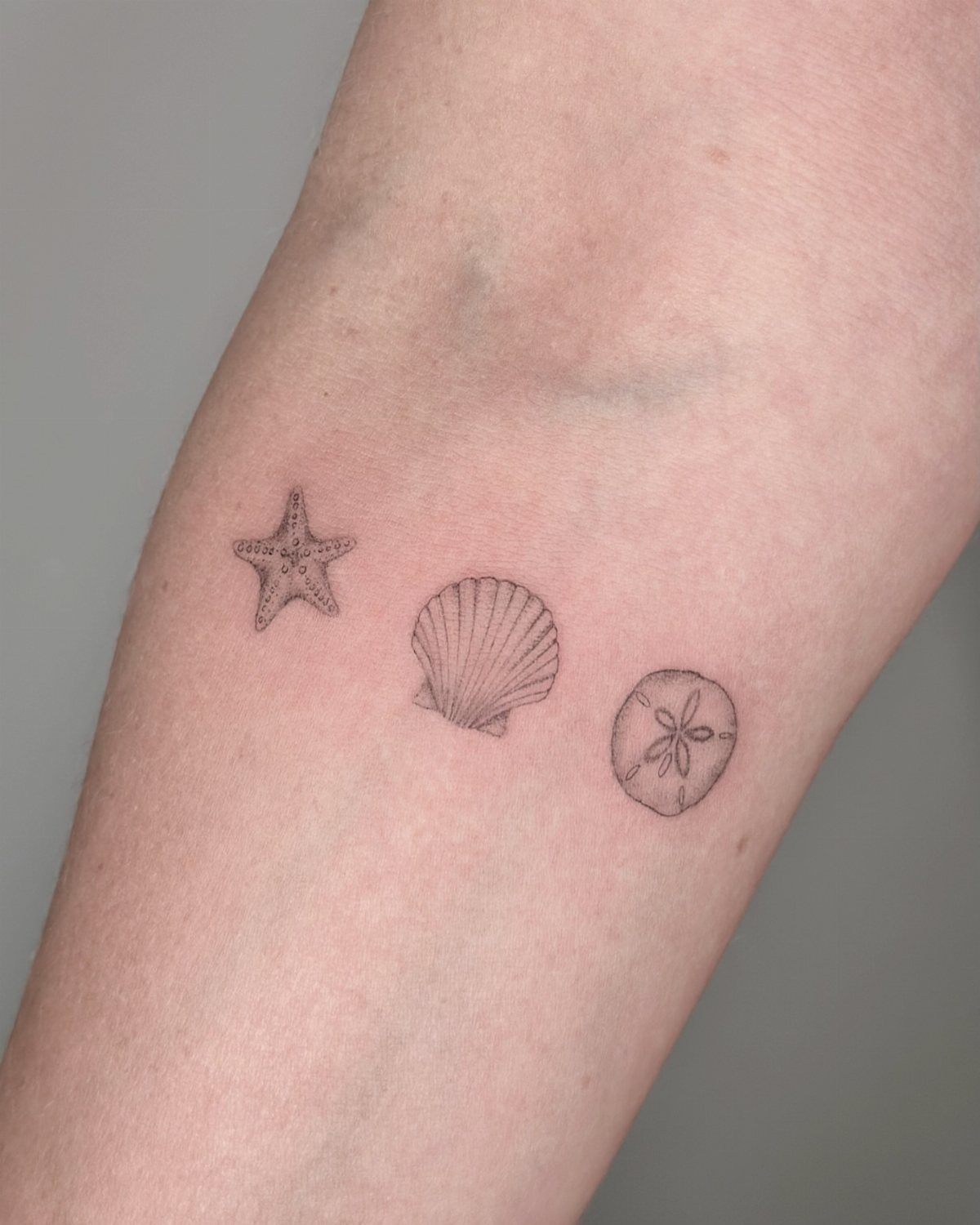
Small seashells carry ocean reference without announcing it across a limb.
A starfish, shell and sand dollar in a row turn the inner arm into a shoreline collection, each drawn fine enough that the group reads as jewelry rather than patchwork.
The placement stays intimate, visible to the wearer and someone close, not broadcast.
Soft energy is the appeal here; the design does not compete for attention.
That same modesty means it will not carry a large concept or cover older work. I would space the 3 elements with room to breathe, too tight and they merge into an unplanned shape.
Add a crab or octopus only if you are building a larger leg piece; alone, the trio says what it needs to.
10. Watercolor Ocean Waves
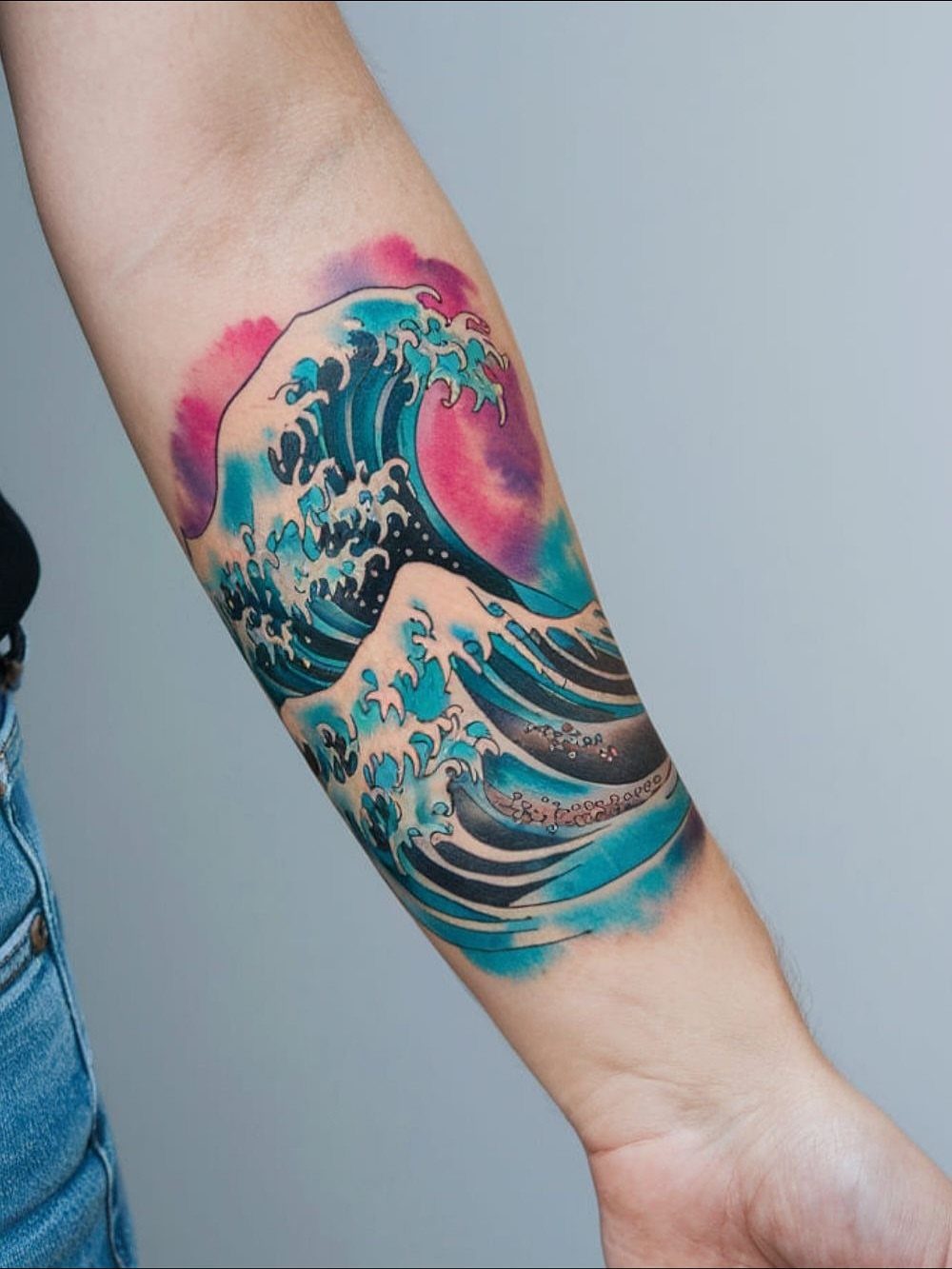
Japanese ukiyo-e prints handle wave geometry better than most tattoo flash; the borrowed composition gives the artist a structure that already works, the curling crest and falling foam arranged to fit a forearm’s length.
Teal and dark blue carry the water, white ink suggests foam, though white fades fastest and needs planning as negative space rather than last-step highlight.
The pink background in some versions is a choice that divides; it reads as sunset sky or as arbitrary color depending on the viewer.
I would ask to see healed photos of any watercolor background the artist has done, the fresh tattoo always looks brighter than what you are left with years later.
Foam patterns are where detail lives or dies, too fine and they disappear, too bold and the wave looks cartoon. The forearm takes sun and abrasion both, so budget for maintenance if the colors stay this saturated.

Precision Transfer Performance - It’s professional-grade tattoo stencil paper delivers vibrant, high-definition transfers even for intricate designs. The carbon layer ensures sharp outlines without smudging or fading, ensuring crisp lines that stay true to your original artwork.

Crystal Clear Transfer & Stable Stencil Effect : Our KVM transparent tattoo stencil film delivers sharp, clean printed lines. The pattern transfers perfectly onto skin, not easy to smudge or wipe off after application. It works great for intricate mandalas, skulls, portraits and line art.

【100pcs Tattoo Stencil Paper Kit】Tattoo Stencil Paper kit come with 100 sheets tattoo stencil paper. 4 Layers of transfer paper includes the master sheet, transparant protective sheet, blue carbon sheet and yellow backing sheet, size approx. 8 1/4" x 11 3/4" which can be cut down into smaller sheets for more use.
Placement Ideas for Tattoos
Sleeves get the attention, but the shoulder and upper back hold a full ocean scene without the commitment of wrapping the arm.
A turtle or manta ray across the shoulder blade keeps the image flat for viewing, the muscle there stays relatively stable over years.
The spine runs narrow; a jellyfish or vertical kelp strand suits it, though bone proximity makes the session harder than surrounding tissue.
The inner arm works for small collections, shells or starfish in a line, visible to the wearer and easy to cover.
Legs take larger single subjects, a thigh octopus or calf wave, with more privacy than an arm piece. I would avoid the elbow ditch for watercolor; the skin there moves constantly and light colors fade unevenly.
Symbolism of Ocean Tattoos
Freedom and adventure are the usual readings, but the specific animal changes the message in ways worth choosing deliberately. Sharks read as self-protection, the animal that keeps moving to survive.
Turtles carry patience and return, the long migration back to one beach. Jellyfish are pure drift, no direction but the current, which appeals or alarms depending on the person.
The octopus splits: intelligence and camouflage for some, the strangling reach of tentacles for others.
Manta rays stay neutral to most observers, which lets the wearer own the meaning privately. I would pick the animal before the style; the symbolism is harder to change later than the color palette.
Color Choices for Ocean Tattoos
Blue and teal dominate because they read as water without explanation, but coral and orange have their place. Reef scenes need warm tones to contrast the cool water; without them the image sinks to one depth.
The golden mermaid and red waves in some flash sheets show how far the palette can push before it stops reading as ocean at all.
Black and grey removes the question entirely, the values of shadow doing the work that color would. It ages cleaner too; the blue inks that look matched fresh often heal to different tones, one toward green, another toward grey.
White ink for foam is a gamble I would skip; it yellows or disappears, and negative space heals brighter than any pigment.
Frequently Asked Questions
What do ocean tattoos represent?
Freedom and adventure are the broad meanings most people recognize, but the specific animal changes the message.
A shark tends to read as guarding your own space, a turtle marks the long haul home, and a jellyfish either celebrates drifting or admits you are at the mercy of something larger.
The octopus splits between intelligence and something more threatening, while manta rays stay neutral enough that the wearer keeps the meaning private.
What are some tattoos to avoid?
Roman numerals or lettering threaded into an ocean sleeve age badly; the scene stays current but the text turns into a timestamp you cannot revise.
White ink meant to look like sea foam is a bet against time; it either yellows or vanishes, and bare skin heals to a brighter white than any tattoo white ever manages.
Watercolor in the elbow ditch is asking for trouble there, since the skin flexes all day and pale tones drop out in patches.