A full-rigged ship and a single panther claw both live in the same vocabulary, but your own commitment level picks which one fits.
The full chest eagle demands multiple sessions minimum and real pain through the sternum, while flash sheet hearts and daggers run same-day from the wall.
The palette is stubbornly small: red, yellow, green and black carry the whole style, and a swallow without its blue-black cap stops reading as a swallow.
1. American Traditional Tattoo Art
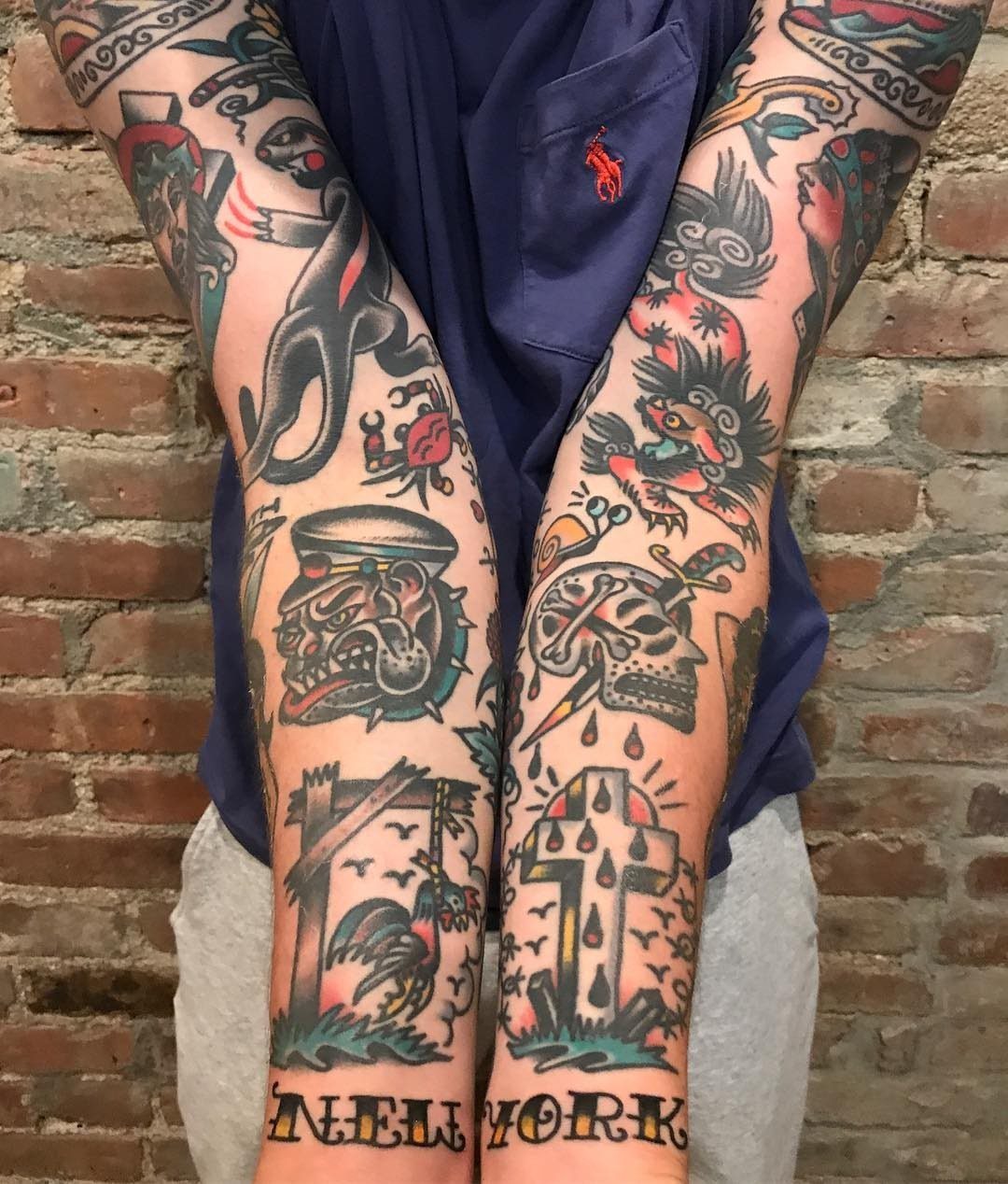
American traditional tattoo art is the look you see on those forearms: thick black outlines, a limited palette of red, yellow, green and black, and subjects drawn from sailor culture and early 20th century Americana.
The style was built for readability at a distance and for aging well, which is why it still holds up.
Before you commit, check that your artist works regularly in this specific style. Not every tattooer who can do bold lines understands the rules: limited color saturation, no smooth gradients, imagery that reads instantly.
Ask to see healed photos from 2+ years back. Flat color and heavy outlines are what you want in this style; gray-wash shading or photorealism means you are looking at the wrong portfolio.

UNFRAMED PRINTS for your home decor or gifts choice. It comes unframed. We use good archival art paper and great design to ensure highest resolution, clarity and overall quality.


Embrace the edgy allure of traditional tattoo art with our alternative tee. Featuring a wolf in sheep's clothing and the iconic imagery of classic tattoos, it is a must-have for those seeking to show appreciation for old school tattoos in a unique way.
2. Eagle Tattoos
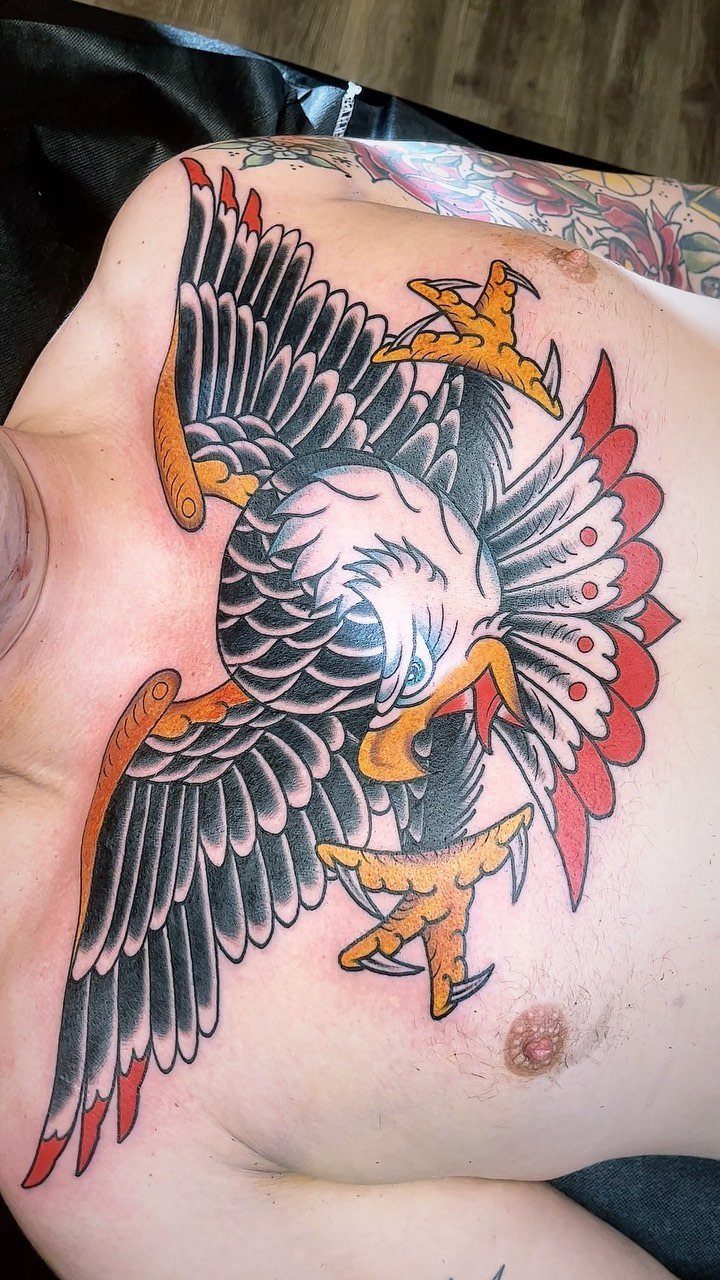
An eagle in this style carries real history: it has stood for American identity, military service, and the freedom of leaving port since tattooing took hold in American ports.
The chest placement is traditional for a reason; broad wings need a flat, broad canvas to read properly.
If you are considering this, know that a chest piece this size runs multiple sessions minimum and the sternum area hurts more than the pectoral shelf.
The bold black outlines and saturated red and yellow in the visible work are non-negotiable for the style; soft coloring or feather detail that blends at the edges drifts into neo-traditional or realism and loses the point.
Pairing the eagle with a banner or flag is common, but the bird alone carries enough meaning that extra elements often clutter rather than add.

【Realistic Temporary Tattoos】77 sheets temporary tattoos adult,17 sheets 7.48"*3.74" half arm tattoo and 60 sheets 3.85"*2.28" small tattoos,including skull tiger fox sword cat parrot lotus flower butterflies snake birds cyprinoid fish and swallow realistic fake tattoos

DESIGN AND ELEMENTS ---- 14 sheets Classic Temporary Tattoo in different sizes including vintage roses, angel, eagle, swordand more. Almost unlimited creative combinations and options can meet your various needs.

Freedom Eagle Traditional Tattoo Artist Inked Tattooed. This is a great present for tattoo artists and tattooists who like traditional artwork and american traditional tattooing styles.
3. Rose Tattoos
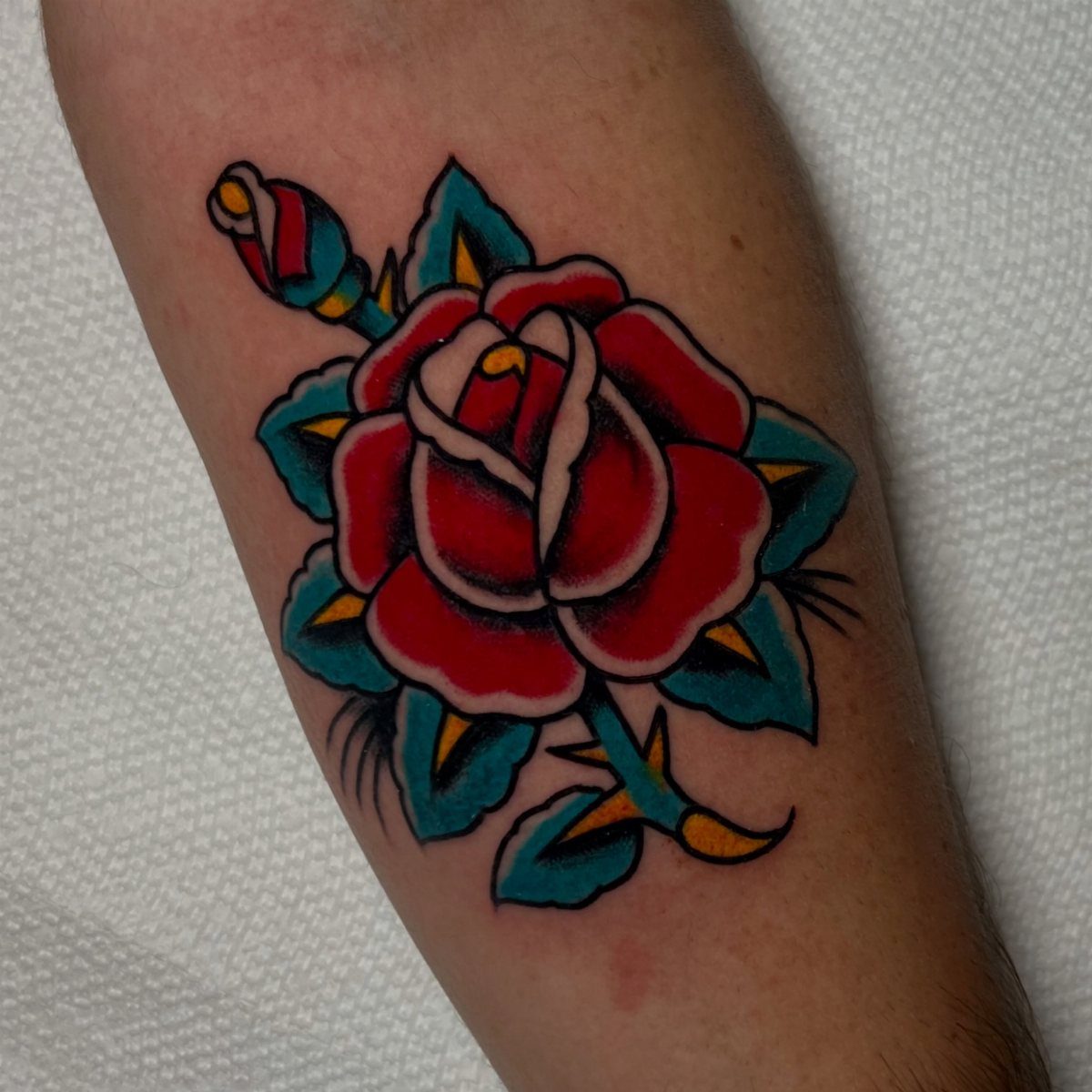
The rose in American traditional work is never just decoration. Paired with a dagger it means beauty and pain together; with a skull it becomes memento mori with a living counterweight.
A forearm piece keeps it simple: one large bloom, teal leaves with yellow highlights, black outlines heavy enough to stay readable after years of sun.
If you want this, decide early whether the rose stands alone or pairs with another motif. Single roses work best on forearms, calves, or upper arms where the round shape fits the muscle.
The yellow accents visible in the leaves are a classic move; green alone goes flat, and the small warm note keeps the color alive.
Budget for touch-ups on red ink, which fades faster than black and can need refreshing at 5 to 8 years depending on your sun exposure.

77 sheets american traditional temporary tattoos,17pieces 7.48*3.74 and 60pieces 3.85*2.28,including sailor,anchor,snake,eagle,sailboat,sailor, pentagram,lighthouse,heart,swallow,flower,vintage roses,swallows,demon,butterflies,sword,skull,eagle,scorpion

[LARGE QUANTITY] There are 2 different size temporary tattoos with a large amount. Large size flower tattoo stickers size is 7.48 * 3.74 inch (19 * 9 .5cm) 17 sheets, small lovely tattoos‘ size is 3.9 * 2.3 inch (9.8 * 5.8cm) 60 sheets. Share and enjoy it with your family and friends

4. Skull Tattoos
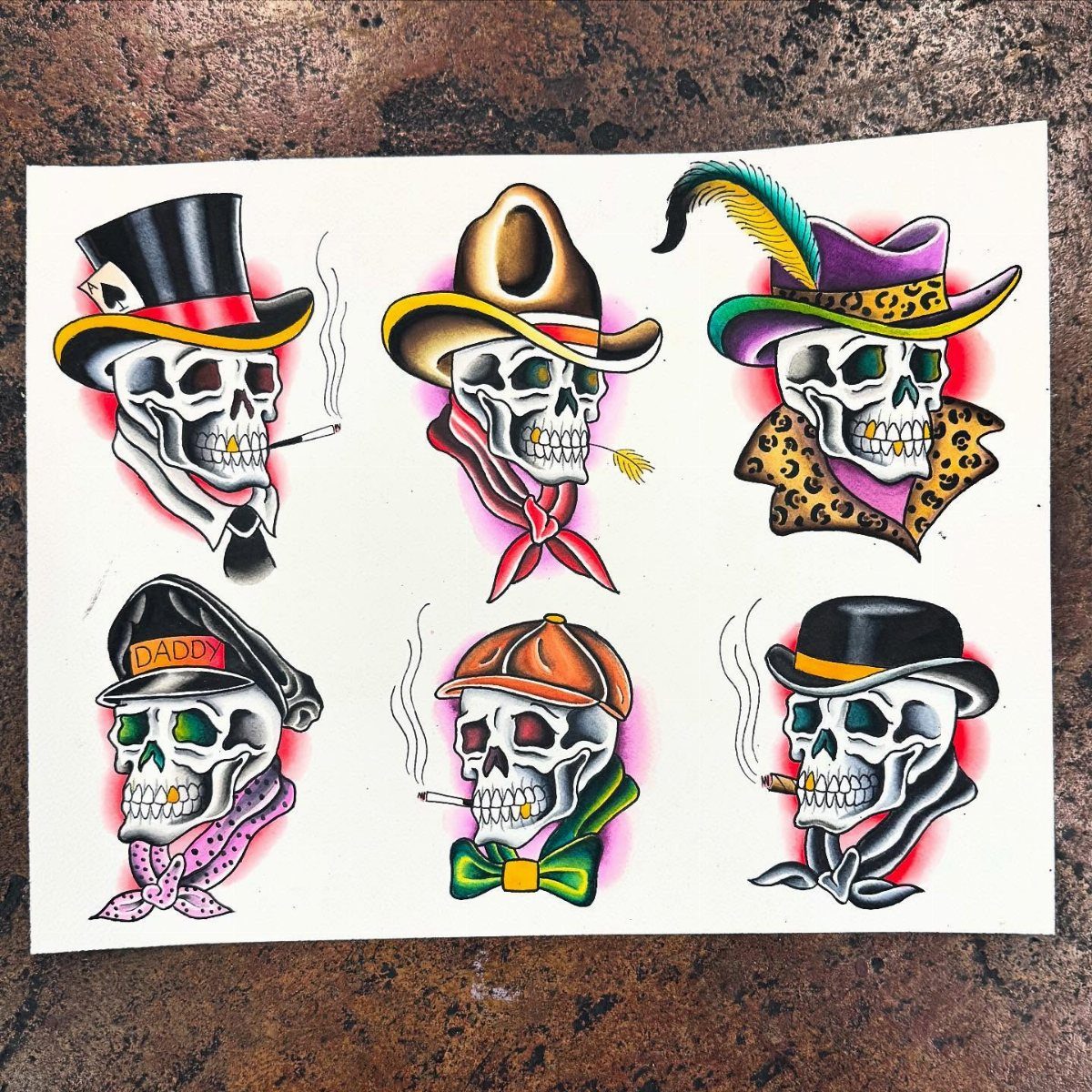
Skulls in this style wear personality rather than anatomical accuracy. A flash sheet shows several variants, each distinguished by headgear: a cap labeled "DADDY," a fedora, a boater.
The joke matters as much as the symbol; American traditional skulls come from a culture that faced mortality daily and responded with dark humor.
If you are drawn to this, choose your accessories deliberately.
A plain skull reads as generic; the hat, the cigarette, the rose in the teeth gives it character. Placement on a flash sheet means these are designed to fit standard spots: upper arm, calf, ribs.
The heavy black shading around the eye sockets and jaw is what separates readable traditional from gray-wash that will mud out over time. Ask your artist about their black ink mix; a carbon-heavy blend holds the dark fill longer.

For the traditional tattoo fan who loves classic American flash art and old-school ink culture. Made for dagger-and-rose collectors and sailor-style ink fans who read "HOLD FAST" as a way of life. Wear it to the convention or studio visit.

Made from the highest quality Oracal 651 Vinyl

5. Panther Tattoos
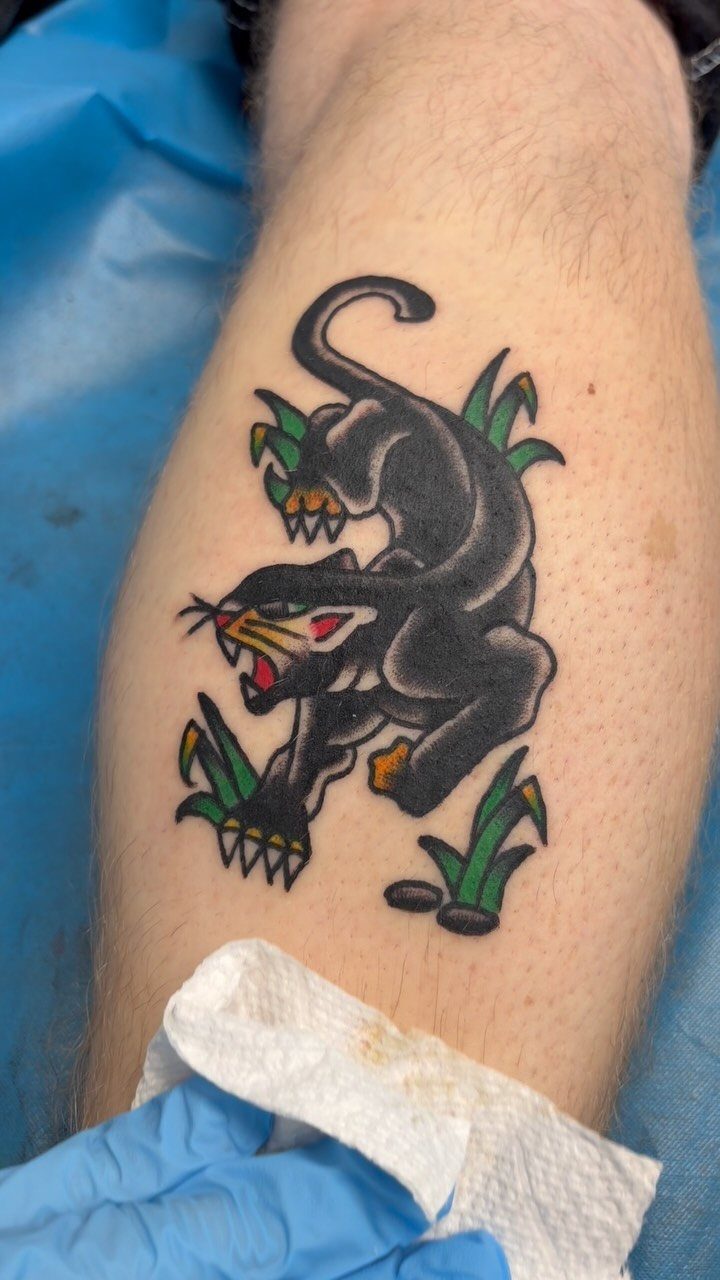
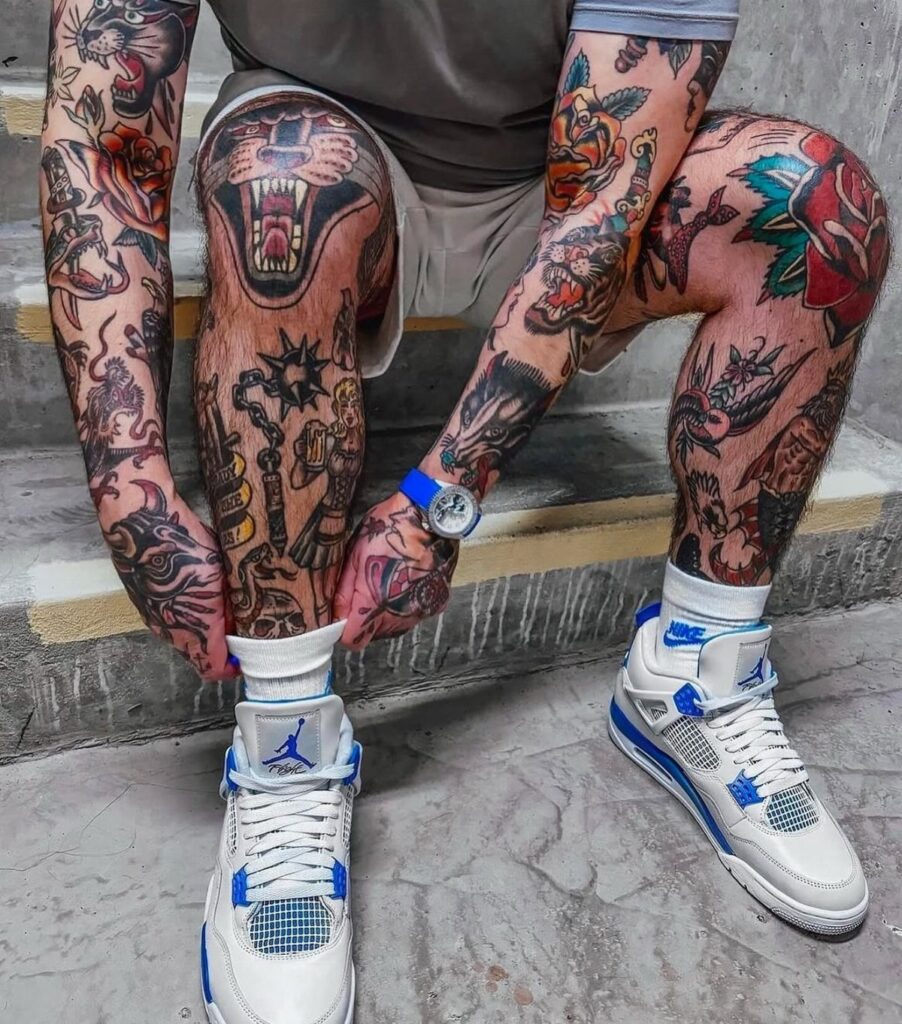
Panther tattoos in this style crawl, leap, or snarl from a single pose: the crawling version on the leg is the most common, muscles compressed, claws extended, mouth open.
The black fill is total, with only the eyes and teeth picked out in white or yellow, which is how the image stays legible even at small sizes.
The leg placement works because the panther’s stretch follows the calf curve; on a flat surface like the chest or back the same design can look pinched.
Fierce poses read better than static ones in this style. A panther sitting upright looks like a logo; one in motion looks like a tattoo.


Bring bold island fashion to your wardrobe with this vintage sailor pin-up girl shirt with tropical Jerry style tattoo. With a retro beach bar design, this old-school line art t-shirt is cool for men & women who love tiki bars and drink nautical cocktails!

6. Ship Tattoos
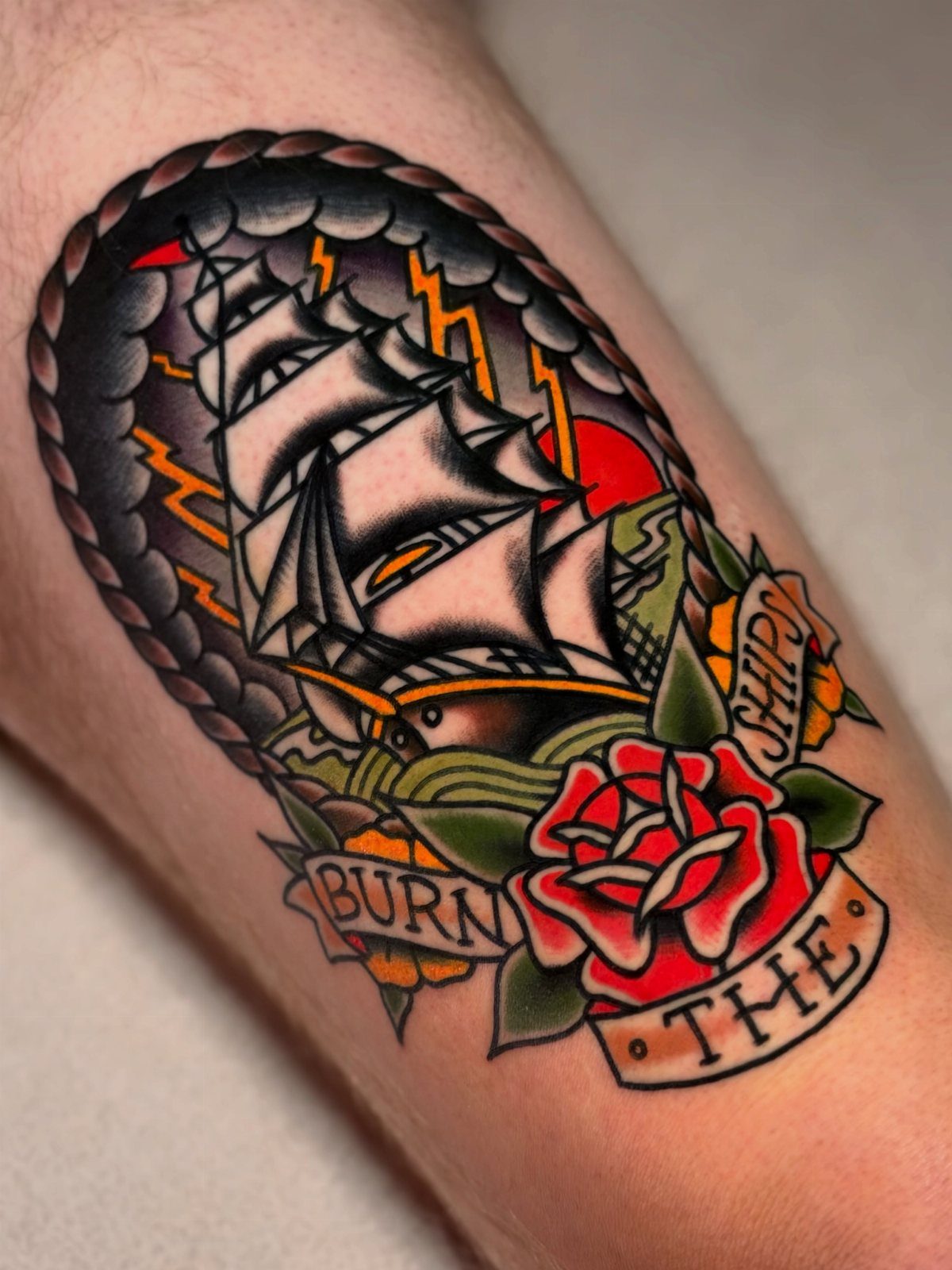
Ship tattoos carry the full vocabulary of the style: rope borders, banner text, storm clouds, lightning splitting the sky.
"BURN THE SHIPS" lettering turns a generic nautical image into a personal statement about commitment, no retreat. The red rose tucked into the composition is traditional balance, life against the danger of the sea.
If you want a ship, gather your reference on hull rigging and sail configuration; American traditional simplifies but does not invent, and a knowledgeable artist will notice if your requested vessel could not actually sail.
The rope border visible here frames the scene and separates it from whatever tattoo might sit adjacent; plan for that if you are building a larger piece.
Storm imagery with lightning reads as active and dramatic; calm seas with a sunset drifts toward a different, softer style.

HOW TO SET THE TONE of your room? How about from the walls out with this unframed france country vintage art set. This 5 pieces print set consists of 3 8x10" and 2 5x7" art prints. Its eclectic themes range from nature landscape, meadow, botanical study to plant drawing. The art set will add a personal flair to your rustic farmhouse or bohemian home. This sage green wall art will be the focal point of your space, inspire conversation when friends visit your home!

Traditional Tattoo Flash Design: Features a bald eagle, coiled snake, dagger and rose, sacred heart, red roses, swallow, horseshoe, stars, and classic bold outlines for a bold vintage tattoo focal point in your room.

UNFRAMED PRINTS for your home decor or gifts choice. It comes unframed. We use good archival art paper and great design to ensure highest resolution, clarity and overall quality.
7. Dagger Tattoos
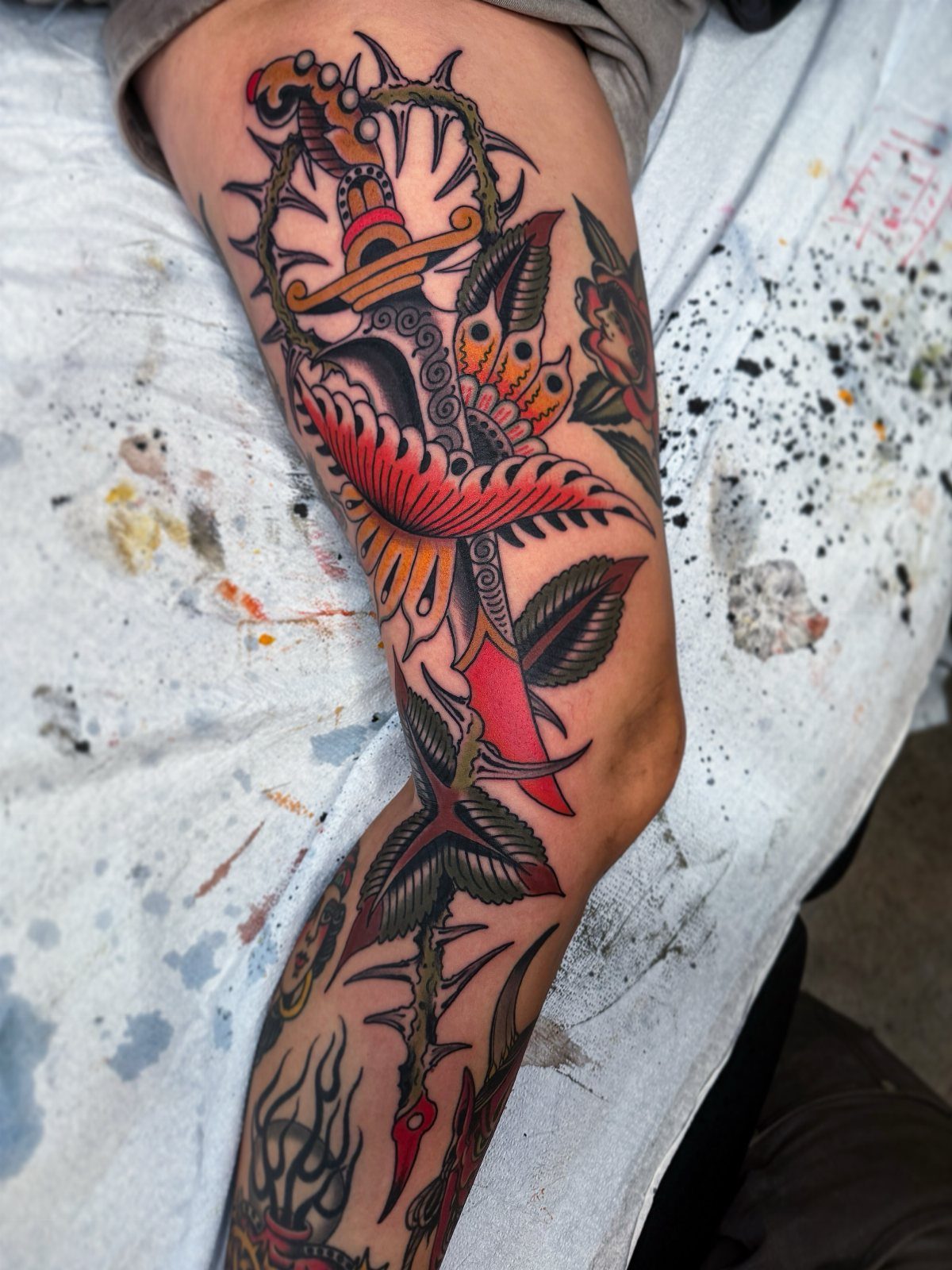
A dagger in this style is never peaceful. The blade cuts through a rose, pierces a heart, or stands alone with thorns wrapping the hilt, and each pairing changes the meaning: sacrifice, betrayal, or the willingness to fight for something.
The thigh and knee placement visible here uses the leg’s length to let the blade run straight; on a curved surface like the upper arm the same design can look bent. Ask your artist about hilt detail.
American traditional keeps ornament bold and readable; filigree too fine will blur inside a decade. Red on the grip or blood drops at the tip is common, but black and green alone read cleaner from across a room.
8. Heart Tattoos
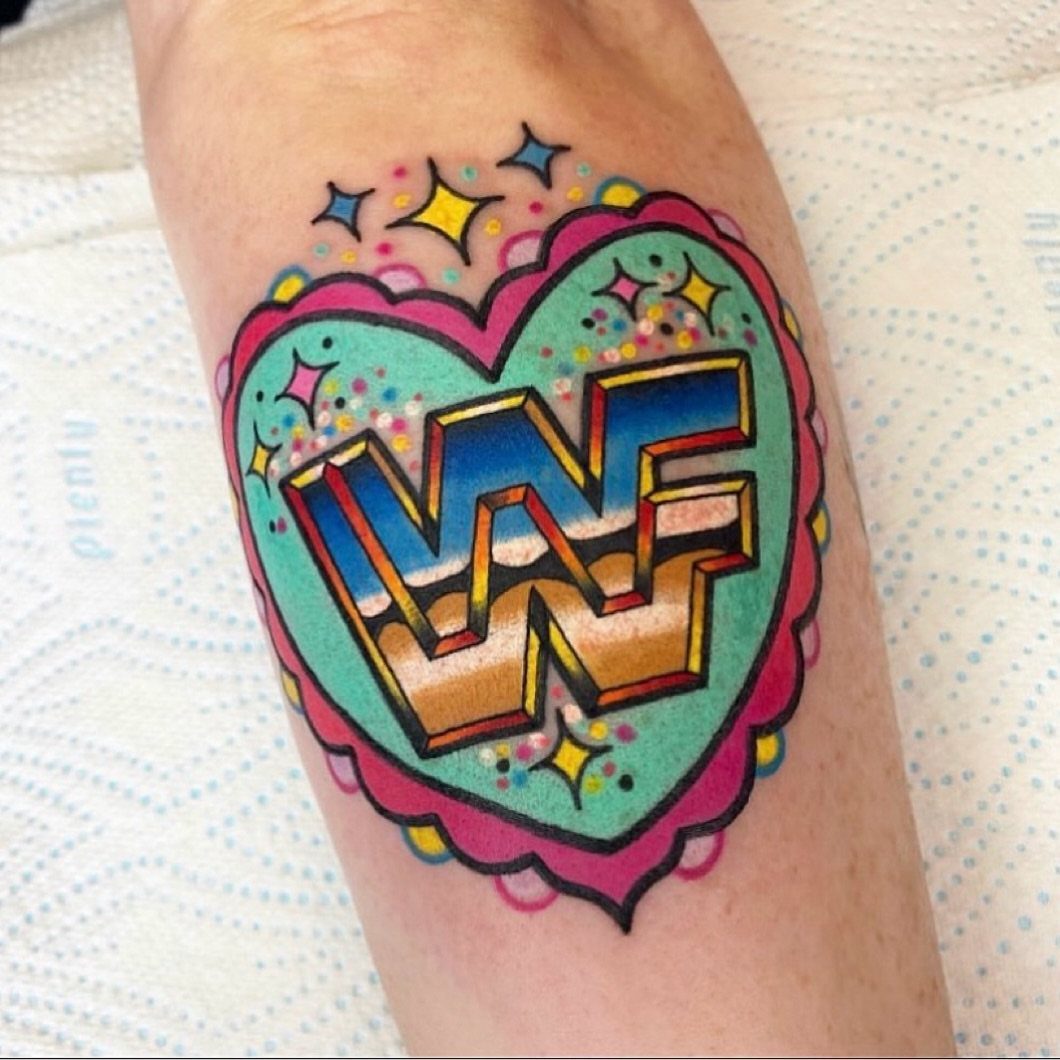
The heart in American traditional work borrows from sailor valentines and circus banners: scalloped edges, flame licks, or a dagger driven through center mass.
A pop culture logo dropped inside the classic heart shape is one way to make the old form carry personal meaning.
Flames, daggers, or paired swallows are the traditional companions; each shifts the tone from romance toward danger, memory, or loyalty.
Bold outlines matter more here than in most subjects because the heart’s simple shape can look like clip art without them.
The teal and pink palette visible here is a modern choice; red and yellow stay the classic move for longer readability. Budget for the fill work, hearts this size need solid saturation to not heal patchy.

Perfect for admirers of American traditional tattoos, old school tattoos and traditional tattoo graphics. Great if you love getting inked, tattoo flash and tattoo streetwear! Show your love for unique edgy graphics with our retro tattoo inspired designs.
9. Swallow Tattoos
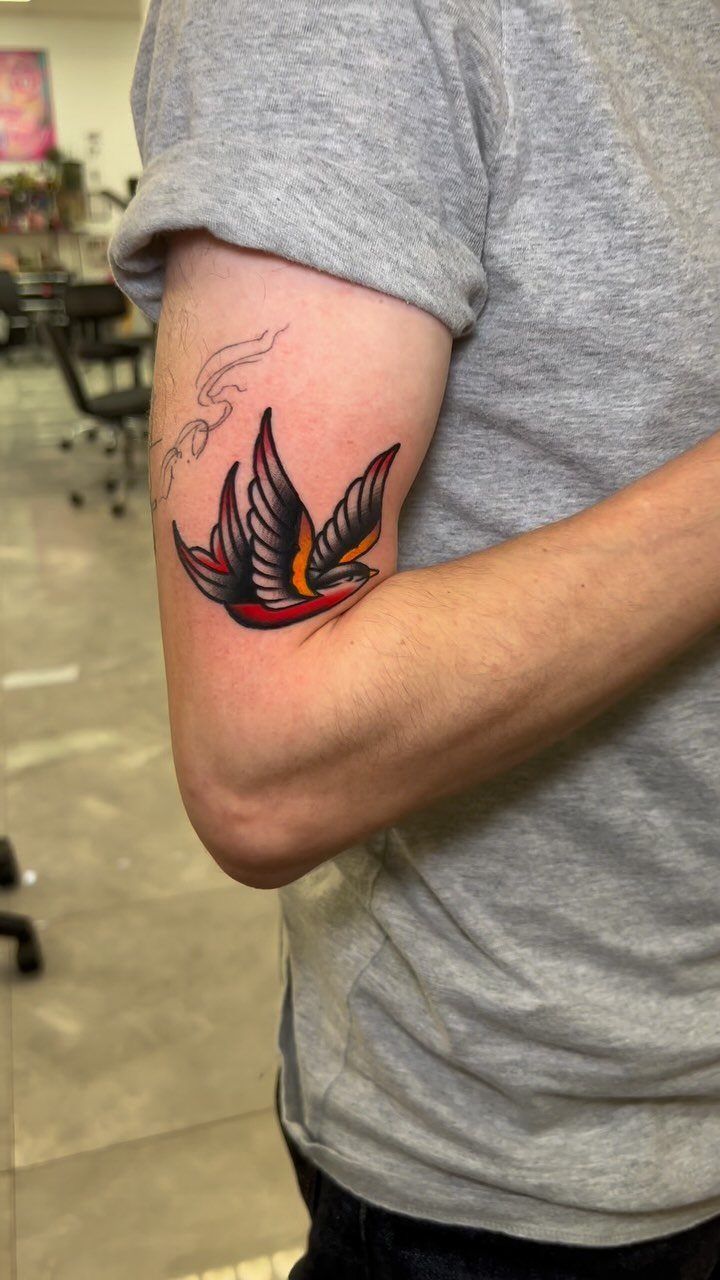
Two swallows marked 5,000 nautical miles sailed, one on each side of the chest.
That history lives in the pose: wings swept back, tail forked, usually in flight toward the heart. The upper arm keeps the swallow tradition alive without asking for the full chest commitment sailors once gave.
Color in this bird is specific: blue-black back, rust or red throat, white belly. The contrast is what makes it read at distance, and a monochrome swallow loses the species recognition that carries the meaning.
Pairing swallows as a matched set is the older custom; a single bird works fine but reads more as travel than loyalty.
Ask to see how your artist handles the wing spread, the feather shapes in traditional work are simplified to bold curves that age better than attempted realism.
10. American Traditional Tattoo Flash Art
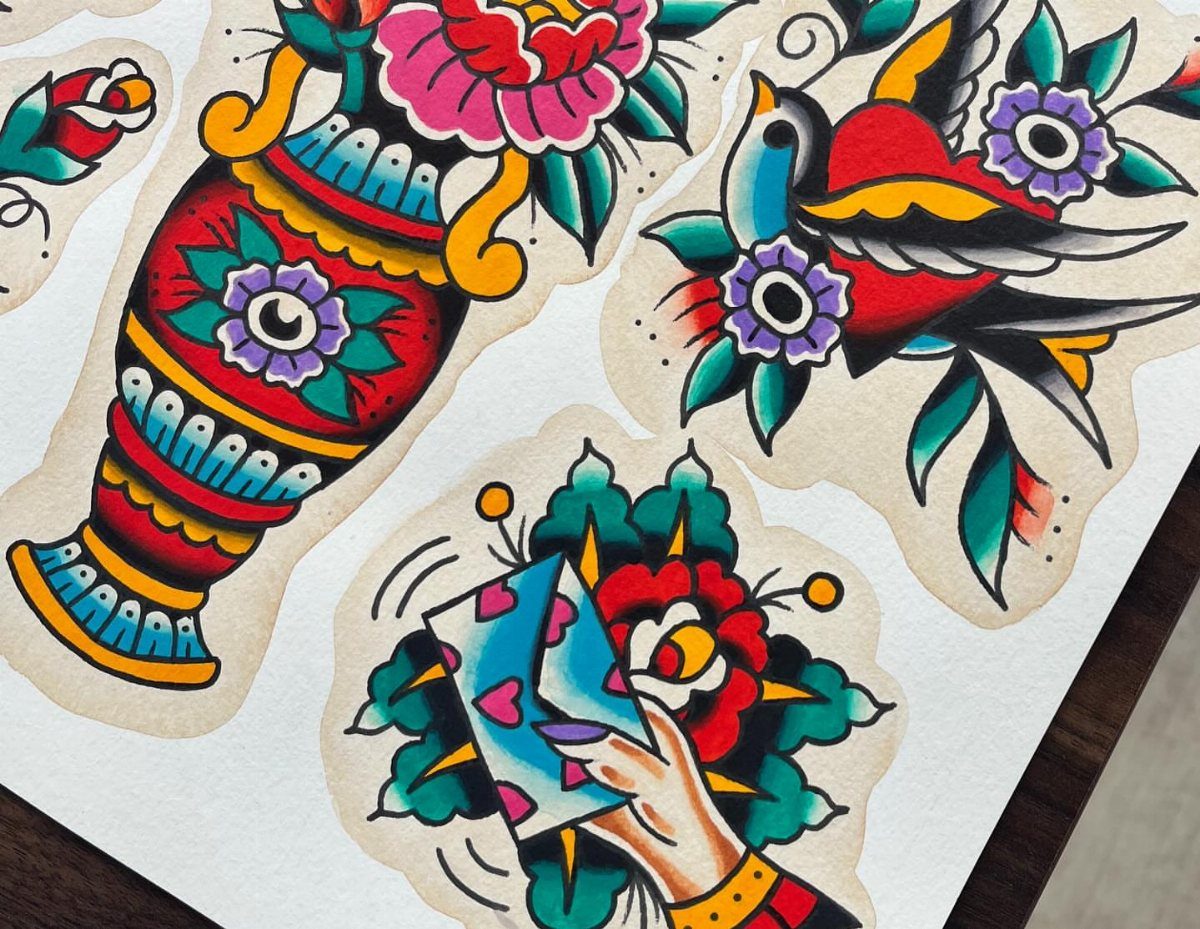
Flash sheets are the reference library of the style: hand-painted designs on paper, sized to fit standard placements, meant to be chosen and tattooed same-day.
The vase, bird, and hand holding a letter above are painted to sell, not to display; the scalloped border and flat color are how the artist signals this is available.
If you want flash, visit shops that keep current sheets on the wall. Older flash is collectible now, and reproductions circulate; a yellowed paper edge does not mean 1960s ink.
Ask whether the design is painted by the shop’s working artists or bought from a supply house, the former usually costs more and fits the shop’s actual style better.
Flash simplifies your decision to: which image, which spot, which colors. That speed is the point.


【Style and Elements】2 sheets of temporary tattoos with 11 Sailor Jerry style designs including flower, globe, treasure chest, gold coin, coconut tree, beach, slot machine, cash, dragon ball, book, drifting bottle, cone, unicorn, bomb and more.

Elements of American Traditional Tattoos
Bold black outlines are the structural backbone of this style, not a decorative choice.
They hold the image together as color fades and skin ages, which is why a trad eagle or panther without that weight looks unfinished rather than subtle.
The classic motifs repeat for a reason: each carried specific meaning in the original sailor and military culture where the style formed.
An eagle meant service and freedom before it became generic patriotism; a swallow marked distance traveled, not travel in general. The motifs an artist has tattooed repeatedly are the ones they know cold, and those heal the most predictably.
Color Palette
The palette is narrower than it looks. Red, yellow, green, and black are the core; blue appears but less often, usually in small areas like a swallow’s back or an eagle’s feather tips.
The heavy black does double duty as outline and shadow fill, which limits how much additional dark tone the design can carry.
This is why gray-wash shading reads as a different style entirely: American traditional builds depth through color blocks and black absence, not through gradation. Yellow faces faster fading than the other colors, especially on hands and forearms with regular sun.
Red sits in the middle for longevity; black holds best of the primaries. When an artist offers teal or pink as in some modern hearts, that is a departure from the original palette, not an expansion of it.
Ask whether the shop mixes its own colors or uses bottled standard sets; consistency matters for how the healed piece matches the fresh one.
Placement of Tattoos
Visibility drove the original placements: forearms for merchant seamen whose sleeves rolled up, chests for military men in open collars, calves for those in shorts or swimming. The flat muscle groups matter as much as the social exposure.
A ship or eagle across the chest needs the pectoral shelf and sternum to read as a single plane; wrap it too far around the ribs and the image breaks at the curve.